The machines, the promises, the power. The complete offline reading edition, generated from the same source as the interactive files.
This is a selected history, not an exhaustive biography or a live legal-status database. The Record contains sourced statements and identified reasoning; Our assessment is editorial opinion. Source notes explain the limits. See the editorial method for scope.
Biography / 1971–1989 · Documented
Before the companies: a boy in Pretoria
Born in South Africa, Musk grew up with books, computers, siblings and the unequal opportunities of apartheid.
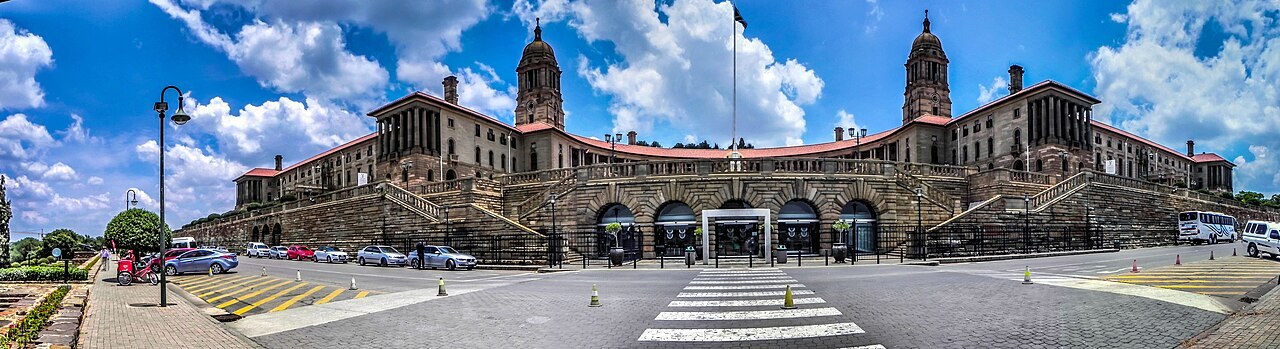
The Union Buildings in Pretoria, South Africa, December 2014. A later regional view of the city where Musk grew up. Paul Saad · CC BY-SA 4.0 · Commons Resized and re-encoded as JPEG; embedded metadata removed. Display may crop and tonally adjust the image. Derivative images retain the source license.
The record
Elon Reeve Musk was born on 28 June 1971 in Pretoria, South Africa. His parents were Maye Musk, a model and dietitian born in Canada, and Errol Musk, a South African engineer. He grew up with a younger brother, Kimbal, and sister, Tosca [1][2].
Books and computers feature repeatedly in his own recollections. At the Computer History Museum in 2013, he recalled discovering a Commodore VIC-20, teaching himself programming and selling games to fund more games and equipment. These are recollections of early interests, rather than proof that a future industrial career was inevitable [3].
Musk also recalled reading comics, playing Dungeons & Dragons, and finding ideas in Douglas Adams’s The Hitchhiker’s Guide to the Galaxy. In the same interview, he described his parents as divorced and said he had unsuccessfully tried to persuade a parent to move to the United States. These are his memories recorded in 2013 [3].
He finished school at Pretoria Boys High [4]. Family members interviewed in 2012 described him as bookish and badly bullied [5].
The accounts above identify their own sources: an encyclopedia entry, university profile, recorded interview, reporting on schooling, and family interviews. Recollections are not independent records of every childhood event.
At the time
His school years unfolded in Pretoria during apartheid, with early interests in books and computers described in interviews [1][3][4].
What the record shows
Later interviews preserve family recollections. Those accounts are attributed; the separate apartheid file explains the wider legal and social context [3][5].
Use the narrow stable birth date and parents’ names. The biography also contains disputed/incorrect dates and broad interpretations, so prefer contemporary corporate and university sources elsewhere.
An alumni interview and retrospective, with promotional framing. Its statement that Musk started Tesla in 2003 is inaccurate: Tesla’s IPO filing dates incorporation to 2003 and his board service to 2004. Its early university chronology is inconsistent across web/PDF versions. Used narrowly for family and migration accounts, not as authority on every company claim.
Primary oral-history transcript: Musk’s recollections of a VIC-20, programming, passport through his Canadian-born mother, education and Zip2. Recollection is not independent proof of every family-finance detail. Limit total derived prose to200words.
Direct interviews provide childhood and citizenship recollections; also describes the claimed mine interest by2012. Interested recollections are not audited ownership or cash flows. Cap100derivedwords across all uses.
Apartheid was a state system of racial domination, not simply a tense atmosphere or a synonym for inequality.
The record
Apartheid was South Africa’s legally enforced system of racial segregation and white-minority rule. The National Party formalized and extended it after 1948. It restricted where people could live, work and study, and excluded the Black majority from equal political power [1].
Musk was born in 1971 and spent his childhood there during the system’s final decades. White families had legal access to opportunities and institutions denied to many Black South Africans. That is the necessary context for any story about the resources available to a white child growing up in Pretoria [1][2].
The struggle to end apartheid involved mass organizing, repression, imprisonment, international pressure and negotiations. Nelson Mandela was released in 1990, and South Africa established its democratic government through the 1994 election [1]. Musk had already left as a teenager; these events should not be confused with his later U.S. business career.
Musk has described seeking technological opportunity in North America [2]. A family member’s political position or a country’s regime should not be automatically assigned to him without evidence. At the same time, acknowledging childhood legal advantage does not require proving that he personally designed or administered the system.
At the time
Musk was born during white-minority rule in 1971 [2].
What the record shows
Mandela’s release in 1990 and the 1994 democratic transition occurred after his departure as a teenager [1][2]. Historical context alone does not establish an individual’s beliefs.
Historical overview defines the white-minority racial system, transition, Mandela’s1990 release and1994 democratic government. Historical archive is retired; stable history used here, not current policy.
An alumni interview and retrospective, with promotional framing. Its statement that Musk started Tesla in 2003 is inaccurate: Tesla’s IPO filing dates incorporation to 2003 and his board service to 2004. Its early university chronology is inconsistent across web/PDF versions. Used narrowly for family and migration accounts, not as authority on every company claim.
Canada, university and the first internet business
The route to Tesla and SpaceX passed through migration, formal education, a local-directory company and online payments.
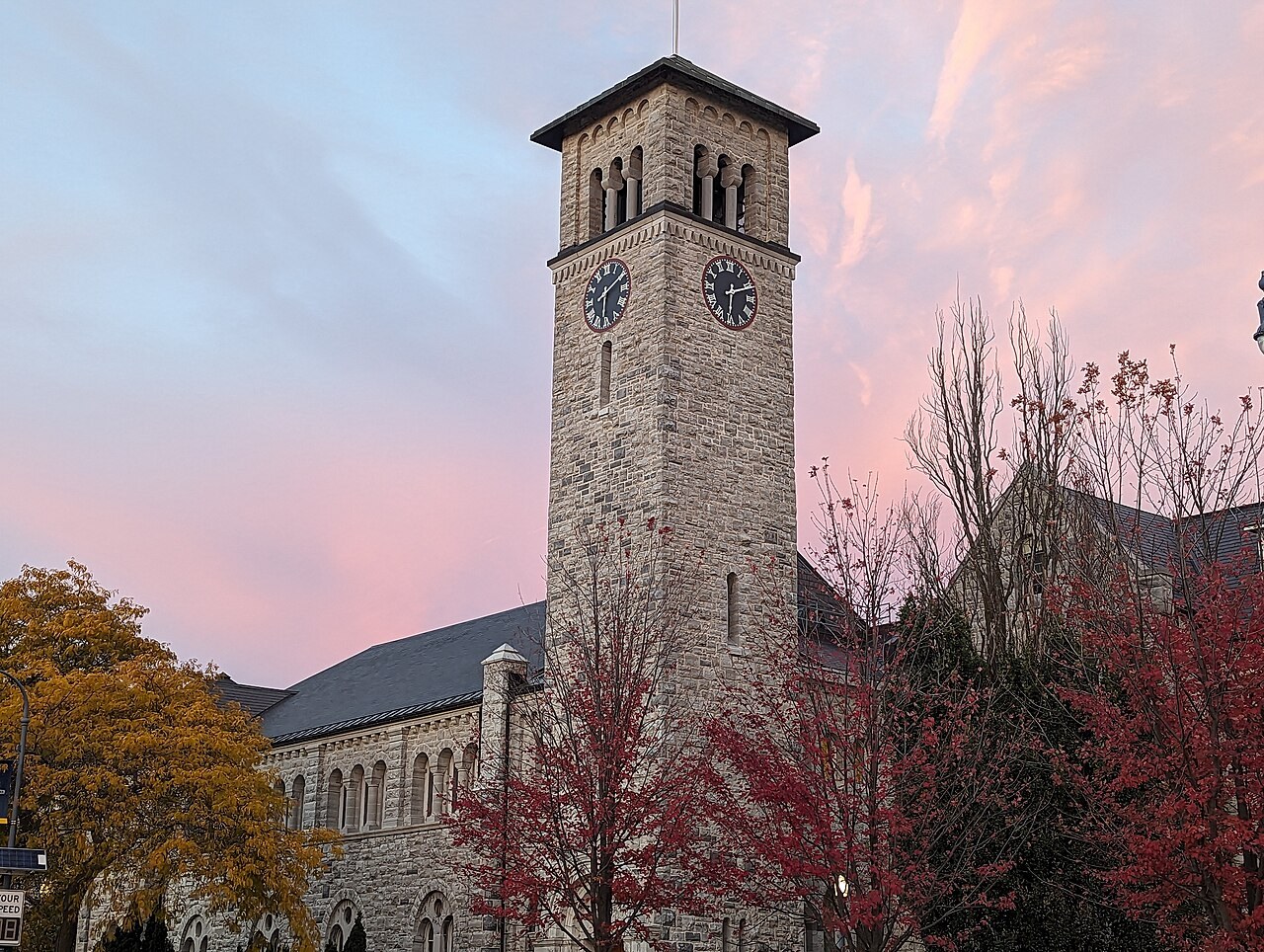
Grant Hall at Queen’s University in Kingston, Ontario, October 24, 2023. A later campus view, not a photograph of Musk’s student years. Takipoint123 · CC BY-SA 4.0 · Commons Resized and re-encoded as JPEG; embedded metadata removed. Display may crop and tonally adjust the image. Derivative images retain the source license.
The record
Musk left South Africa for Canada as a teenager. In a 2013 recorded interview, he described obtaining a Canadian passport through his Canadian-born mother and seeing North America as a route toward technology opportunities. He studied at Queen’s University in Kingston before transferring to the University of Pennsylvania [1][2].
The Queen’s profile presents avoidance of apartheid-era military service as part of the departure story [2]. Musk’s recorded interview emphasizes technological opportunity [1]. These accounts give reasons for leaving; they do not by themselves document a specific role in the anti-apartheid movement.
Penn’s own account makes an often-missed distinction: he left in 1995, but his physics and undergraduate business degrees were formally awarded in 1997. It says he planned graduate study at Stanford in California, then pursued the expanding internet economy instead [3]. The familiar story of “dropping out after two days” should not be mistaken for earning a Stanford degree.
In 1995, he co-founded Zip2 with his brother Kimbal. It supplied online business listings and mapping services to publishers. Compaq bought the company in 1999; a company sale price is different from the amount received by any one founder. Musk then invested in X.com, an online financial-services company that merged with Confinity in 2000 [2][3][4].
He became a U.S. citizen in 2002, according to reporting that described his naturalization ceremony [5]. In the same year, he founded SpaceX [3]. The PayPal sale and his new ambitions moved his career from internet businesses toward space and, soon afterward, electric vehicles.
At the time
He came to North America, studied at Queen’s and Penn, then pursued internet businesses [1][2][3].
What the record shows
Penn distinguishes leaving in 1995 from degrees awarded in 1997. The subsequent Zip2 and PayPal history documents distinct steps before the industrial companies [3][4].
Primary oral-history transcript: Musk’s recollections of a VIC-20, programming, passport through his Canadian-born mother, education and Zip2. Recollection is not independent proof of every family-finance detail. Limit total derived prose to200words.
An alumni interview and retrospective, with promotional framing. Its statement that Musk started Tesla in 2003 is inaccurate: Tesla’s IPO filing dates incorporation to 2003 and his board service to 2004. Its early university chronology is inconsistent across web/PDF versions. Used narrowly for family and migration accounts, not as authority on every company claim.
Penn distinguishes leaving in1995 from formal graduation1997; describes intended Stanford study and Zip2/X.com. Institutional primary source for credentials and contemporary account of Musk’s lecture; not an uncritical source for all first-ever claims in the article.
Contemporary corporate disclosure: the March 2000 X.com–Confinity merger, Musk’s management history and ownership. A securities filing describes the company, not a single-inventor story.
Direct interviews provide childhood and citizenship recollections; also describes the claimed mine interest by2012. Interested recollections are not audited ownership or cash flows. Cap100derivedwords across all uses.
Discloses incorporation in 2003, Musk’s board service beginning in 2004 and CEO service beginning in October 2008. Filed history and legal chronology carry more weight than a shorthand biography.
The first financial engine / 1999–2002 · Documented
PayPal was a merger, not a one-person invention
X.com and Confinity became a shared business. The eventual sale supplied capital for very different bets.
The record
Musk’s X.com and Confinity merged in March 2000. The combined business ultimately took the PayPal name. The IPO prospectus records Musk’s time as chief executive and his ownership alongside the people who built Confinity’s payments product [1].
eBay completed its PayPal acquisition in October 2002. The purchase was a company transaction involving its shareholders, rather than a personal payment of the headline acquisition value to Musk [2].
The prospectus names Musk’s management and shareholding alongside other founders and executives, including Peter Thiel and Max Levchin [1]. The company history therefore contains both the X.com and Confinity contributions.
Contemporary corporate disclosure: the March 2000 X.com–Confinity merger, Musk’s management history and ownership. A securities filing describes the company, not a single-inventor story.
Incorporation, early financing, engineering leadership and a legal co-founder title describe different parts of Tesla’s beginning.
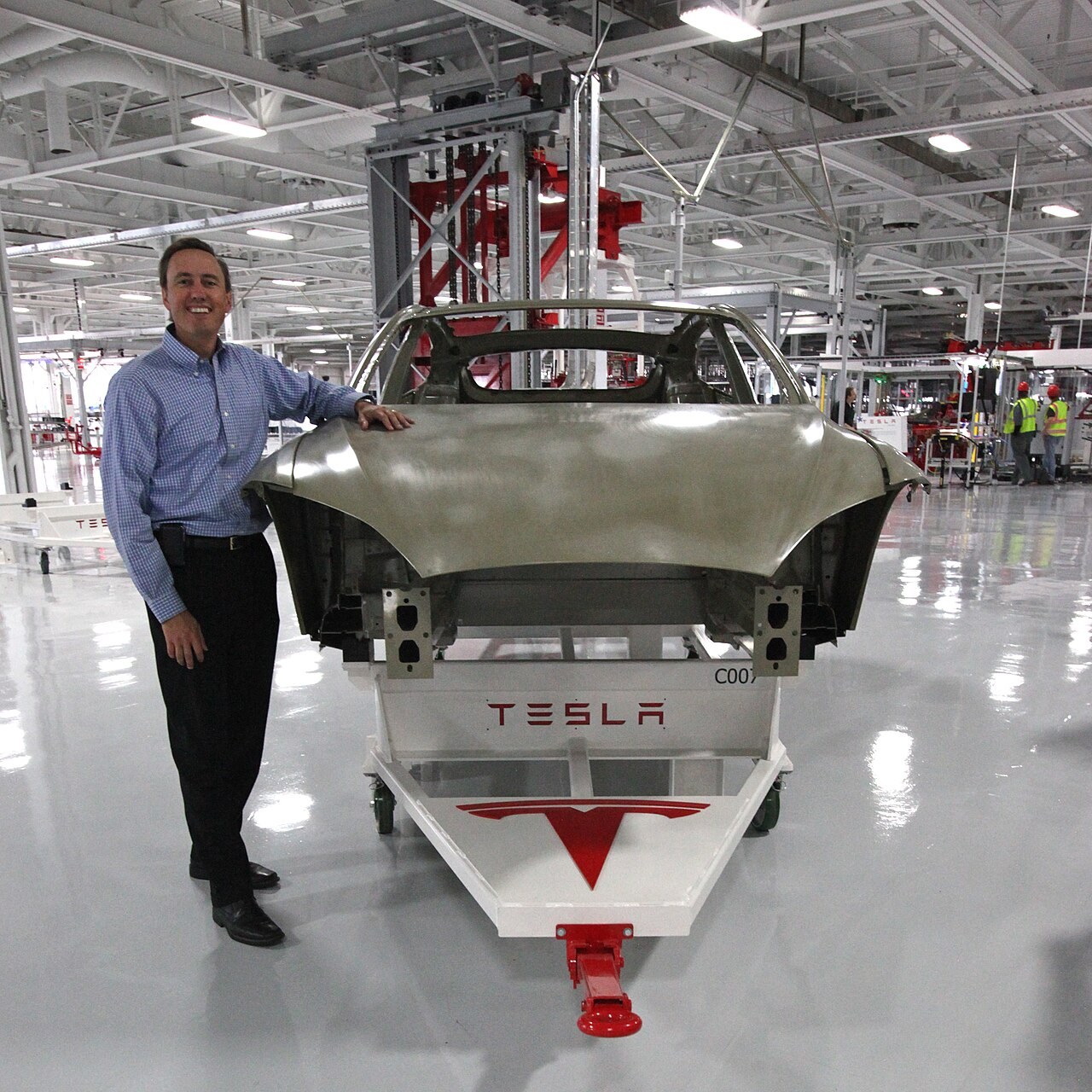
Tesla’s Fremont factory floor, October 5, 2011. An early production-era view, not a picture of present-day operations. Steve Jurvetson · CC BY 2.0 · Commons Resized and re-encoded as JPEG; embedded metadata removed. Display may crop and tonally adjust the image. Derivative images retain the source license.
The record
Tesla was incorporated in 2003. Martin Eberhard and Marc Tarpenning began the company; Musk joined its early financing and became board chairman in 2004, then CEO in October 2008. The IPO filing makes the dates clear [1].
A 2009 settlement followed Eberhard’s lawsuit. Contemporary reporting identifies five people entitled to use the co-founder designation: Eberhard, Tarpenning, Ian Wright, Musk and JB Straubel [2].
Being a recognized co-founder therefore does not mean Musk incorporated Tesla or invented electric cars. Conversely, arriving after incorporation does not make his financing, product involvement and later leadership fictitious. The strongest account names what each person did and when.
Documented checkpoints & limits
2003–2004
The company precedes Musk’s arrival
The IPO filing dates incorporation and his board service separately. Source ↗
2008
The role changes
Musk becomes CEO in October, according to the filed biography. Source ↗
2009
A disputed origin becomes a legal title
Settlement reporting identifies five co-founders; it does not rewrite the incorporation date. Source ↗
At the time
Tesla incorporated in 2003; Musk’s financing and board service began in 2004. [1]
What the record shows
The 2009 settlement account recognizes five co-founders; it does not change their different entry dates. [2]
Discloses incorporation in 2003, Musk’s board service beginning in 2004 and CEO service beginning in October 2008. Filed history and legal chronology carry more weight than a shorthand biography.
Contemporary reporting on the confidential settlement and Tesla’s public description of Musk and Eberhard as co-founders. It does not establish that all five joined on the incorporation date.
An EV business gets built / 2006–2025 · Official record
From an expensive sports car to industrial scale
Tesla’s scale is a concrete achievement. Continuing growth is a separate claim that must be checked against dated results.
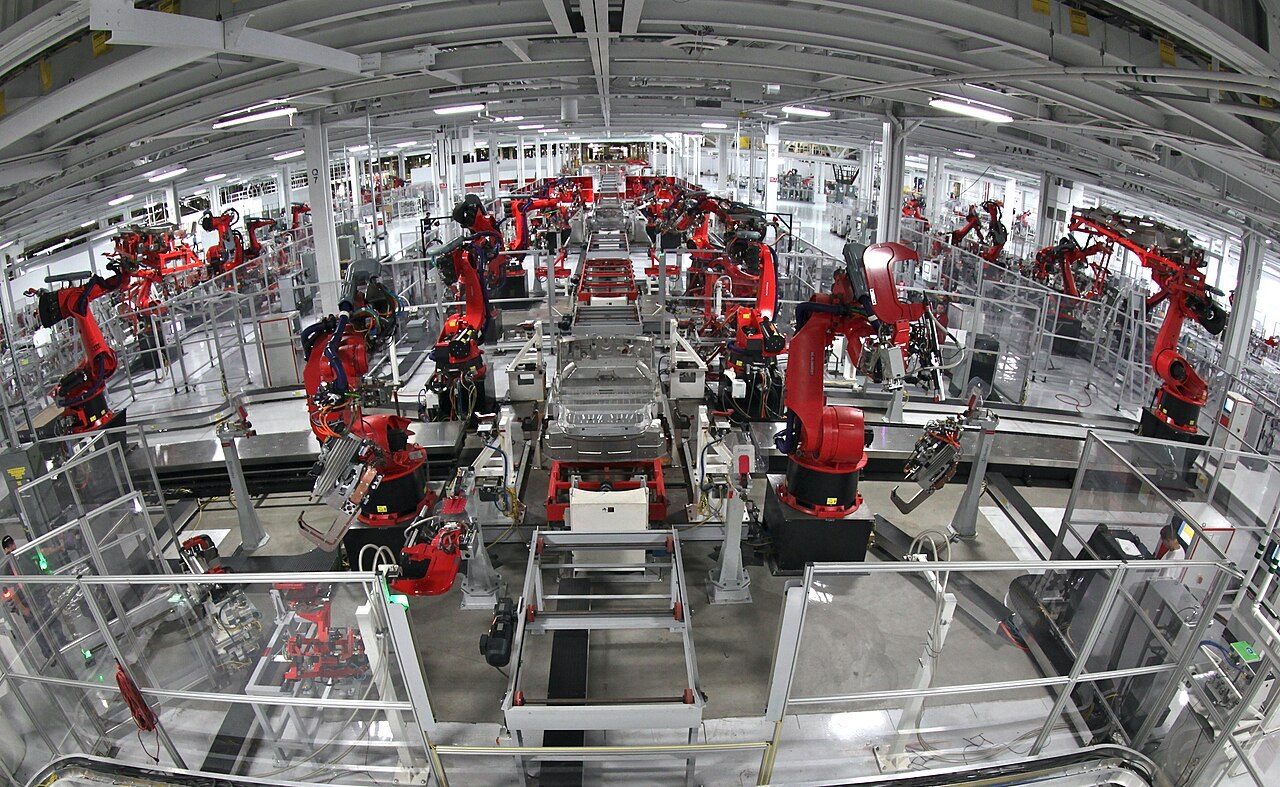
Tesla’s assembly line at Fremont, California, March 21, 2012. A historical production view; the image does not document the working conditions alleged in later cases. Steve Jurvetson · CC BY 2.0 · Commons Resized and re-encoded as JPEG; embedded metadata removed. Display may crop and tonally adjust the image. Derivative images retain the source license.
The record
Musk’s 2006 master plan proposed beginning with a high-priced sports car, then using the business to develop progressively more affordable vehicles. It is a useful original document because it states the strategy before the later mass-market models [1].
Tesla reported 1,808,581 deliveries in 2023. That is evidence of a large operating manufacturer, well beyond a prototype or publicity demonstration [2]. Its 2025 annual filing reported approximately 1.64 million consumer deliveries, illustrating why historical scale and uninterrupted growth are different claims [3].
These figures measure company deliveries. They do not isolate the contribution of a single executive or establish that every later product promise was fulfilled.
At the time
The 2006 plan described a route from an expensive sports car toward cheaper models. [1]
What the record shows
Reported 2025 deliveries were below the 2023 total; substantial industrial scale is not the same as continuous delivery growth. [2][3]
A primary statement of strategy: start with an expensive sports car and move toward cheaper models. Aspirational pricing and outcomes must be checked separately.
Primary annual disclosure: about 1.64 million consumer deliveries, 46.7 GWh storage deployment in 2025; separates supervised consumer systems from Robotaxi. Reported totals do not independently validate every safety or marketing claim.
Electric cars have a climate case—and a supply-chain cost
Lifecycle analysis supports an EV advantage under many conditions. Tailpipe emissions alone cannot tell the whole story.
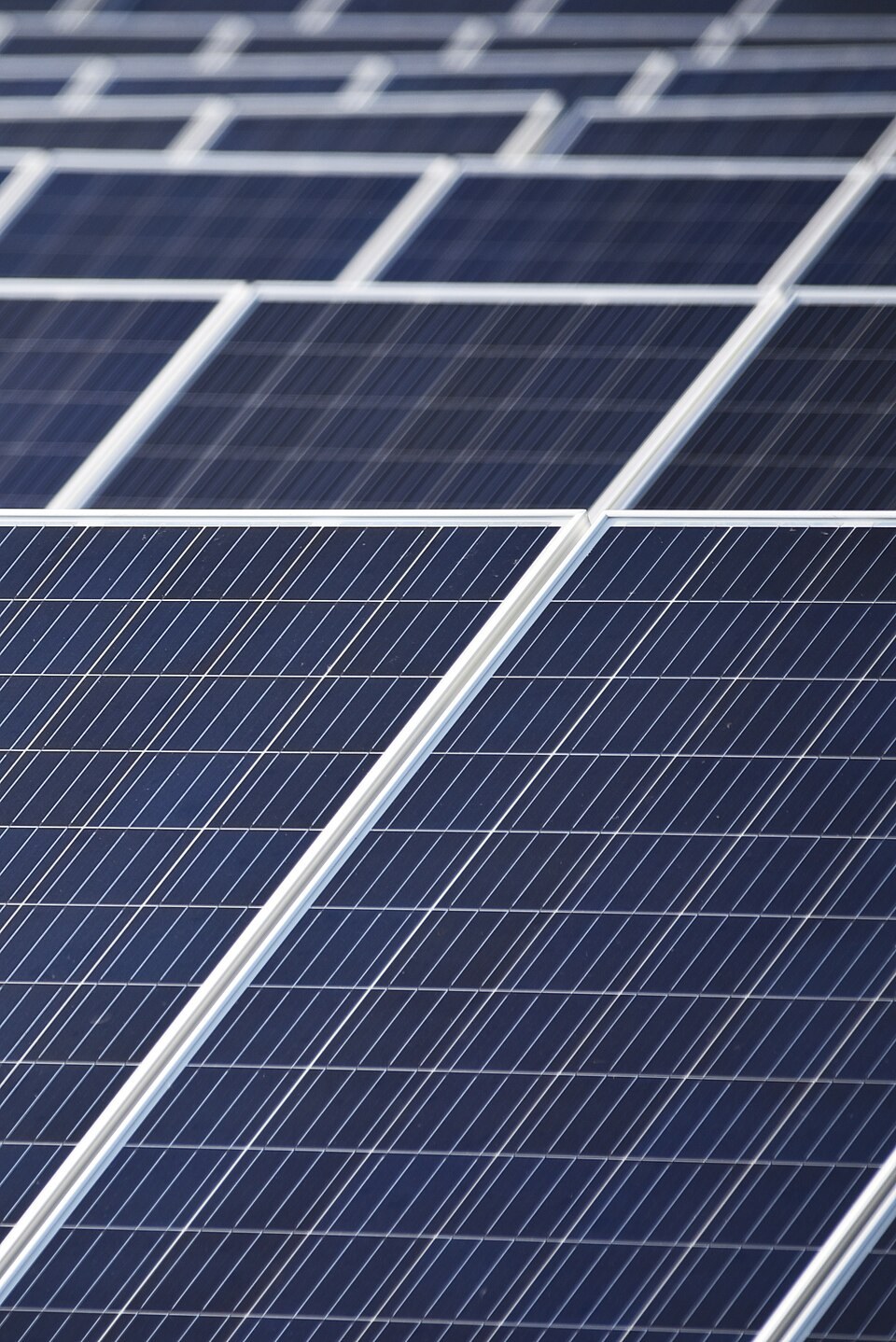
Solar panels in Minnesota, July 16, 2019. Energy-sector context; these are not identified as Tesla or SolarCity panels. Courtney Celley / U.S. Fish and Wildlife Service · Public domain · Commons Resized and re-encoded as JPEG; embedded metadata removed. Display may crop and tonally adjust the image. Derivative images retain the source license.
The record
The International Energy Agency’s lifecycle analysis compares vehicle manufacturing, battery production, fuel or electricity use and vehicle lifetimes. Battery electric cars generally have lower lifetime greenhouse-gas emissions than comparable combustion vehicles, while the size of that advantage changes with electricity supply and use [1].
The IEA’s separate battery-supply-chain assessment also describes significant manufacturing, material and sourcing impacts. An EV can improve the climate balance while still carrying environmental and human costs that deserve scrutiny [2].
This matters for assessing Tesla and Musk. Selling electric vehicles is not an empty contribution just because battery production has an impact. Equally, “zero emissions” without a tailpipe qualifier can obscure upstream emissions. Avoid comparing an unusually large EV with an unusually small petrol car and treating the result as universal.
At the time
A tailpipe comparison measures only one part of a vehicle’s emissions. [1]
What the record shows
The 2024 IEA assessments include manufacturing and energy supply; benefits vary with assumptions and coexist with battery supply-chain impacts. [1][2]
Comparative lifecycle modelling accounts for manufacturing, electricity and vehicle use. Global/region assumptions do not yield an identical emissions saving for every driver.
Powerwall and Megapack turn battery expertise into infrastructure whose output can be measured.
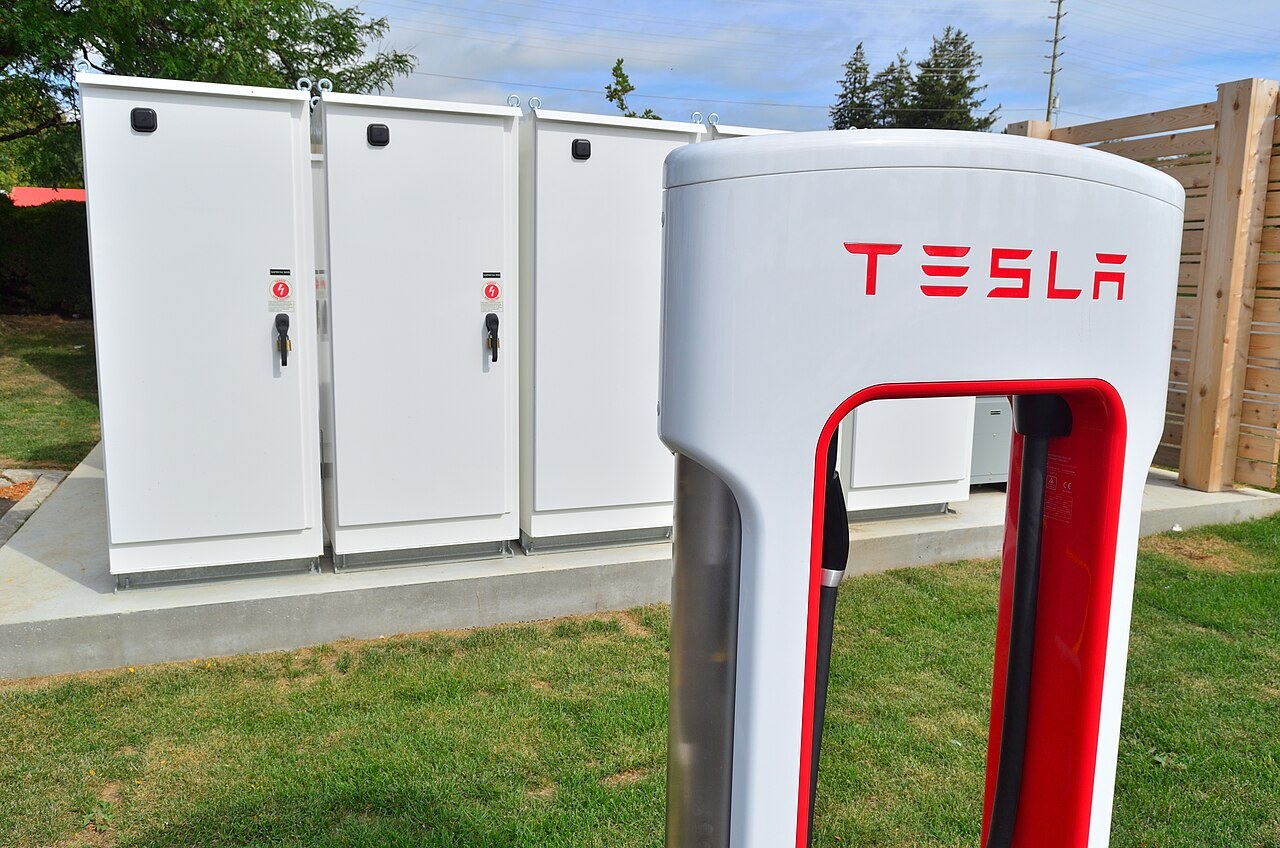
Tesla Powerpack battery equipment at a Supercharger in Markham, Ontario, September 7, 2018. Powerpack is an earlier product than Megapack. Raysonho / Open Grid Scheduler / Scalable Grid Engine · CC BY-SA 4.0 · Commons Resized and re-encoded as JPEG; embedded metadata removed. Display may crop and tonally adjust the image. Derivative images retain the source license.
The record
Tesla reported deploying 31.4 gigawatt-hours of energy storage products in 2024 [1] and 46.7 GWh in 2025 [2]. These are annual deployment figures, not electricity generated and not an estimate of emissions avoided.
The annual disclosure describes Powerwall for residential and smaller uses and Megapack for commercial and utility-scale applications [1]. GWh measures stored-energy capacity; it is not a measure of power output in GW.
The deployment figures establish the reported scale of a product business. They do not provide a project-by-project measurement of avoided emissions or establish that batteries alone solve grid decarbonization.
At the time
Tesla reported 31.4 GWh of annual storage deployment in 2024. [1]
What the record shows
Reported deployment increased in 2025; deployment is storage capacity, not electricity generated or measured emissions avoided. [2]
Dated corporate baseline: 31.4 GWh energy storage deployment in 2024, regulatory-credit revenues and incentive exposure. Financial filings are not proof of emissions avoided at a particular project.
Primary annual disclosure: about 1.64 million consumer deliveries, 46.7 GWh storage deployment in 2025; separates supervised consumer systems from Robotaxi. Reported totals do not independently validate every safety or marketing claim.
Charging access helped make EV ownership practical. Standardization can broaden that benefit beyond one manufacturer.
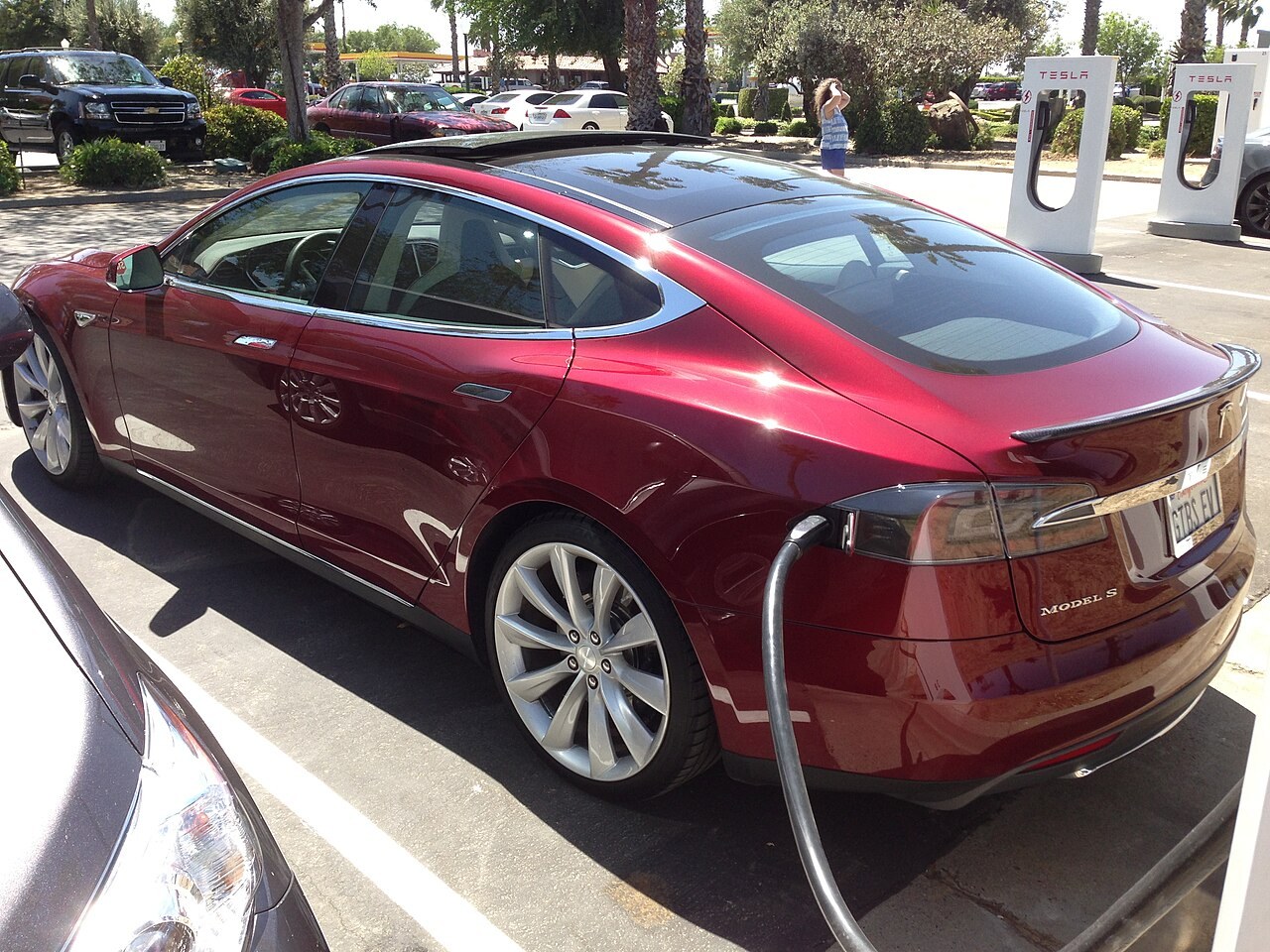
A Tesla Model S at the Harris Ranch Supercharger in California, April 2013. Charging context; prices and access policies have changed since this photograph. Jusdafax · CC BY-SA 3.0 · Commons Resized and re-encoded as JPEG; embedded metadata removed. Display may crop and tonally adjust the image. Derivative images retain the source license.
The record
In November 2022 Tesla invited charging operators and vehicle manufacturers to adopt its connector design, which it called the North American Charging Standard. Its original statement and later update document a move from a company interface toward a broader standard [1].
SAE issued J3400 in December 2023 and subsequently revised the standard. The standards body’s publication record is stronger evidence of standardization than the word “standard” in a company product name [2].
Hardware compatibility, adapter availability, payment arrangements and a manufacturer’s access agreement still matter. The existence of J3400 does not mean every EV can use every Supercharger. A real infrastructure achievement becomes more useful when the limits and access conditions remain visible.
At the time
Tesla published its connector-design invitation in November 2022. [1]
What the record shows
SAE issued J3400 in December 2023; connector standardization does not itself guarantee a particular vehicle access to a particular charger. [2]
Company’s original charging invitation and later acknowledgment of SAE J3400. A connector standard alone does not guarantee every vehicle can use every station.
An opening, with terms / 2014 onward · Needs context
The patent pledge has conditions
Tesla promised a form of patent restraint. That is different from putting everything it owns in the public domain.
The record
Tesla’s published legal terms describe an irrevocable pledge not to initiate certain patent infringement suits against parties acting in good faith. The terms define that phrase, including restrictions involving competing intellectual-property claims and knock-off products [1].
The same page calls the pledge a standstill on enforcement and says it is not a transfer of rights, a conventional license or a general authorization to use patented technology. It does not publish every manufacturing secret or turn the company’s software into open source [1].
An expansive headline can therefore exaggerate a real policy. The existence of conditions does not make the pledge nonexistent; the existence of the pledge does not erase those conditions. Reading the original terms gives a more useful answer than either slogan.
At the time
The 2014 policy was widely described as opening Tesla’s patents. [1]
What the record shows
The legal terms describe a conditional enforcement standstill, not transfer of patent ownership or unrestricted release of company technology. [1]
Public money, different forms / 2010–2013 · Official record
The public helped finance the risk. Tesla repaid the loan.
Loans, development partnerships, purchases and consumer incentives should not be added together as if they were one cash gift.
The record
The Department of Energy issued Tesla a $465 million Advanced Technology Vehicles Manufacturing loan in January 2010. Its own case study records full repayment, including interest, in May 2013—nine years early [1].
Public credit helped an uncertain manufacturer scale. Repayment is an important outcome of that policy, but does not retrospectively remove the financing support or the government’s initial risk. It also does not say anything by itself about later state incentives, consumer credits or regulatory-credit revenue.
SpaceX’s COTS partnership used a different mechanism: NASA’s historical account records $396 million in agency development support and approximately $454 million in company financing [2]. Those figures describe a particular program, not all SpaceX funding. A later purchase of launch services is another category again.
Documented checkpoints & limits
2010
Public credit helps Tesla scale
DOE issued $465 million in financing; risk and repayment terms belong in the account. Source ↗
2012
Development and company financing coexist
NASA’s COTS history records $396 million of agency support and about $454 million of company financing. Source ↗
2013
The loan is repaid
DOE records principal and interest repaid nine years early. Source ↗
2023
A headline subsidy is denied
FCC reaffirms rejection of Starlink’s roughly $885.5 million application; do not count it as cash received. Source ↗
At the time
DOE financed Tesla through a 2010 loan; NASA’s SpaceX development partnership used a separate funding structure. [1][2]
What the record shows
DOE records repayment with interest in 2013. The initial public financing and repayment are both documented; neither converts all public involvement into one accounting category. [1]
Primary retrospective confirms a $465 million ATVM loan issued in January 2010 and repayment with interest in May 2013, nine years early. Public support was real and so was repayment.
NASA’s historical accounting puts SpaceX COTS public funding at $396 million and company financing at approximately $454 million. Development support differs from buying cargo flights.
The May demonstration and October cargo delivery turned a proposed service into working logistics.
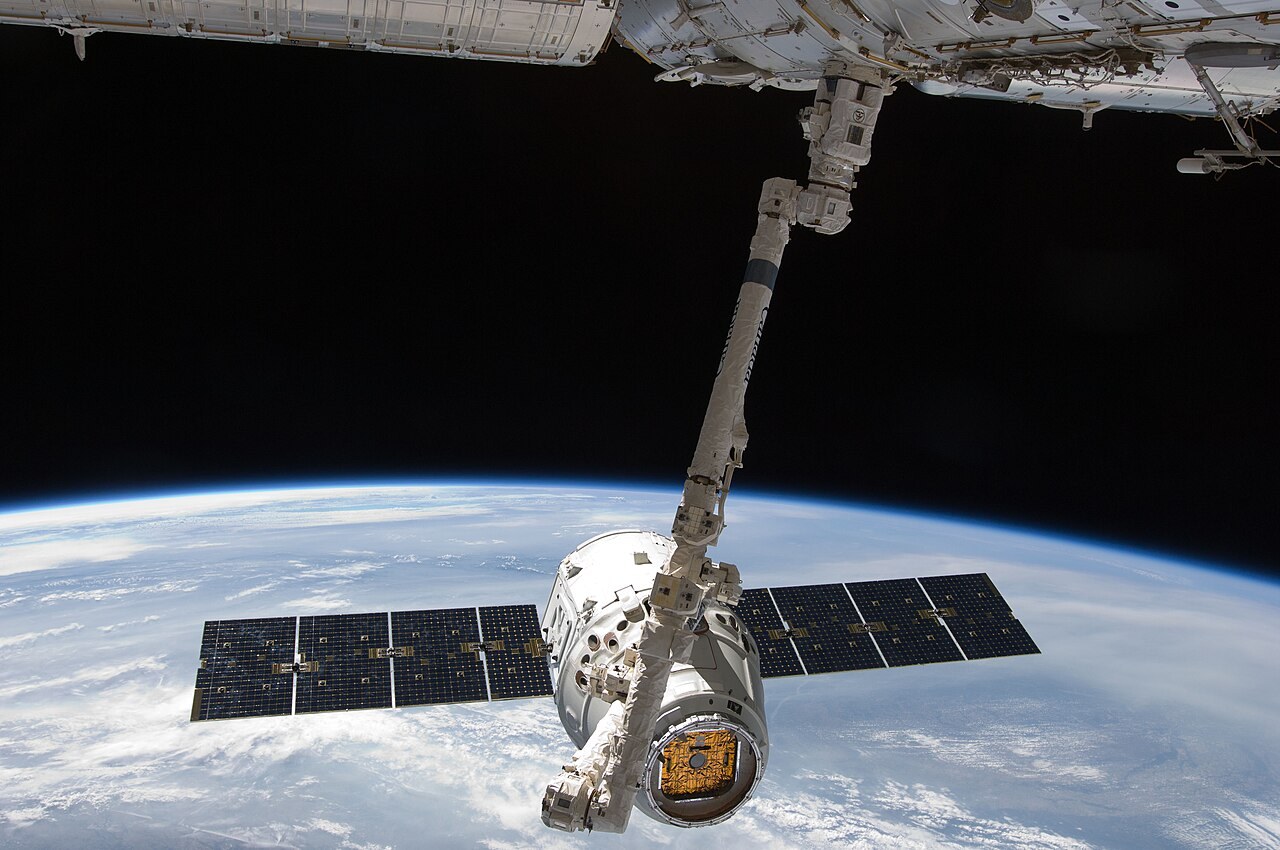
Dragon grappled by the International Space Station’s Canadarm2 on May 25, 2012, during the COTS demonstration mission. NASA · Public domain · Commons Resized and re-encoded as JPEG; embedded metadata removed. Display may crop and tonally adjust the image. Derivative images retain the source license.
The record
On 25 May 2012, astronauts on the International Space Station captured SpaceX’s Dragon and berthed it with the station. NASA described it as the first commercial company spacecraft to reach that milestone [1].
In October, Dragon completed its first contracted resupply arrival under NASA’s Commercial Resupply Services program. The operational flight followed the earlier development demonstration; they were connected achievements, not the same mission [2].
NASA’s accounts identify the company spacecraft, public development program, contracted resupply service, station crew and ground operations as parts of the missions [1][2]. The demonstration and service contract are distinct stages.
At the time
The May 2012 station visit demonstrated Dragon’s cargo capability. [1]
What the record shows
October 2012 brought the first contracted resupply arrival, a separate mission under the operational services program. [2]
Contemporary confirmation of the demonstration mission and station crew’s role. Dragon was captured by the station’s robotic arm and berthed, rather than performing a crewed landing.
Reflight was more than a render. The exact engineering claim still matters.
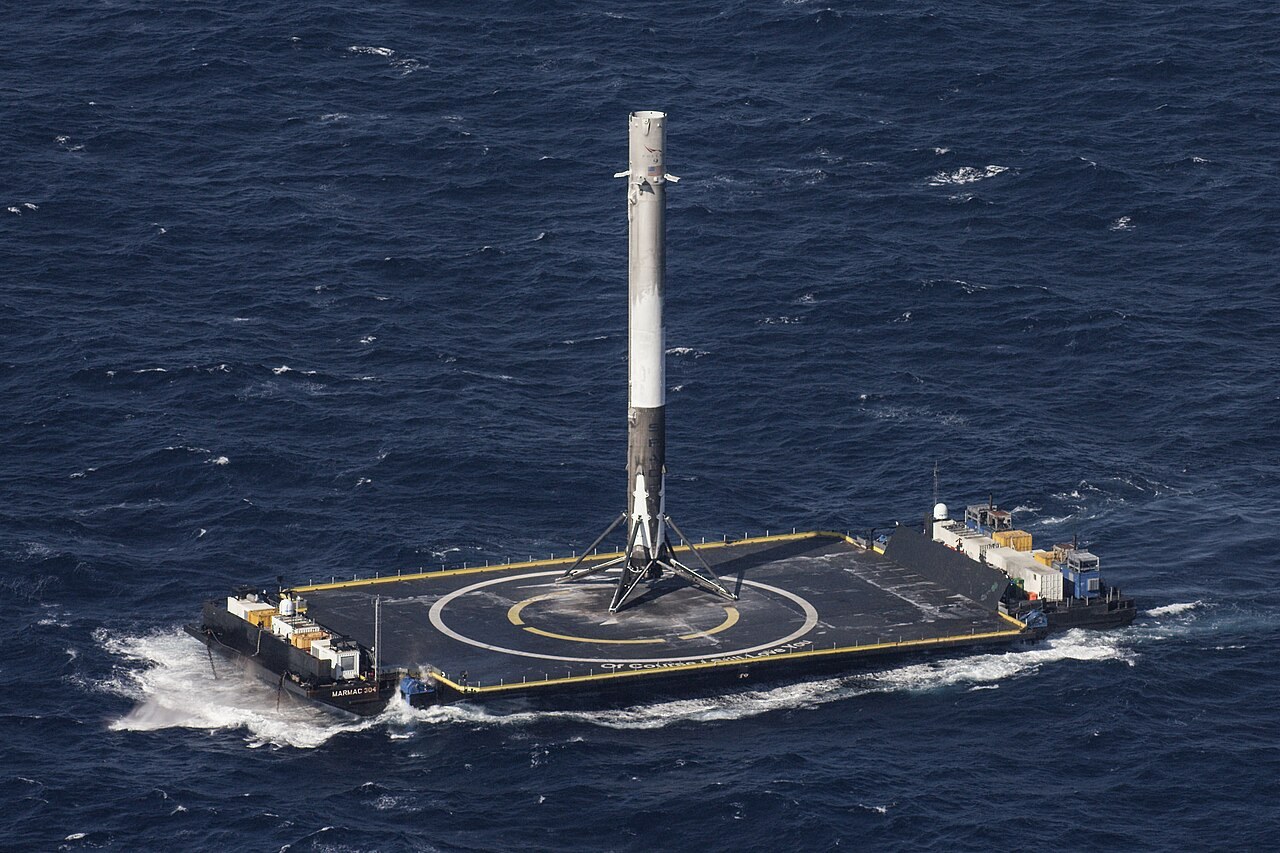
The Falcon 9 first stage on the drone ship Of Course I Still Love You after the CRS-8 mission’s successful landing, photographed April 9, 2016. SpaceX · CC0 · Commons Resized and re-encoded as JPEG; embedded metadata removed. Display may crop and tonally adjust the image. Derivative images retain the source license.
The record
On 30 March 2017, a previously flown Falcon 9 first stage launched the SES-10 satellite, then landed again. Contemporary video shows the sequence. It was the first reflight of a Falcon 9 booster on an orbital mission [1].
Falcon 9 is a two-stage vehicle. First-stage recovery and reuse should not be described as making the entire vehicle fully reusable, and recovering hardware is not itself an audited measure of launch profit or the price of every mission [2].
At the time
SES-10 launched on a previously flown Falcon 9 first stage on March 30, 2017. [1]
What the record shows
Falcon 9 remains a two-stage design: that milestone demonstrated booster reuse, not recovery and reuse of the complete vehicle. [2]
Contemporary event record hosting SpaceX’s launch webcast: 30 March 2017, first reused Falcon 9 first stage. Does not show full-vehicle reuse or independently reveal operating margins.
A crewed launch, docking and safe return provide a firmer achievement than a launch photograph alone.
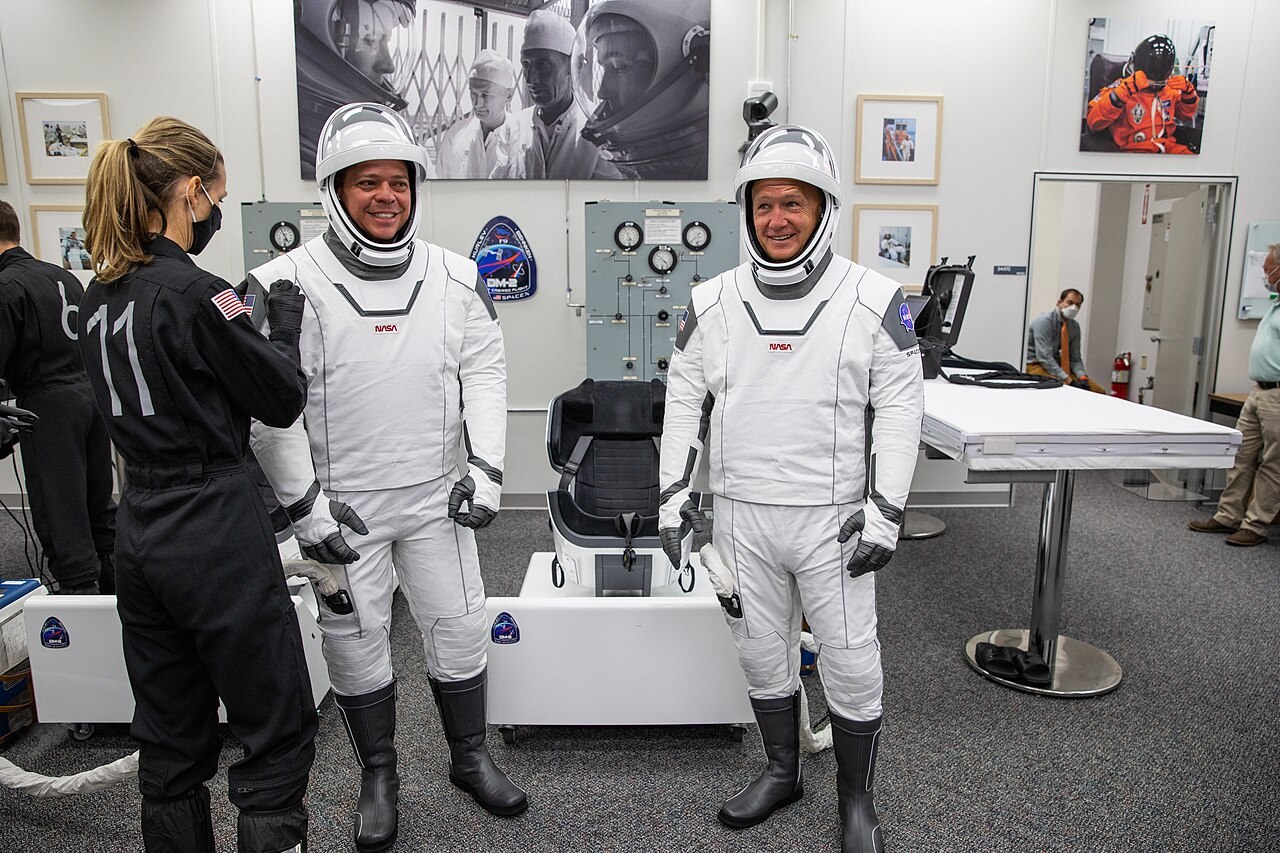
NASA astronauts Robert Behnken (left) and Douglas Hurley suit up at Kennedy Space Center before the Demo-2 launch, May 30, 2020. NASA / Kim Shiflett · Public domain · Commons Resized and re-encoded as JPEG; embedded metadata removed. Display may crop and tonally adjust the image. Derivative images retain the source license.
The record
On 30 May 2020, SpaceX launched NASA astronauts Robert Behnken and Douglas Hurley aboard Crew Dragon. It was the first launch of astronauts to orbit from the United States since the Space Shuttle’s retirement in 2011 [1].
The demonstration concluded with a safe splashdown on 2 August. NASA’s account describes the flight as part of its Commercial Crew Program and the final test before certification for regular operations [2].
This was not the first human spaceflight or the first reusable spacecraft. Its historically precise significance was a commercially built and operated American crew transport developed with NASA, restoring a domestic capability. Musk’s leadership belongs in that story alongside the astronauts, engineers, technicians, suppliers and public program.
At the time
Demo-2 launched Behnken and Hurley on May 30, 2020. [1]
What the record shows
The demonstration completed its return on August 2, 2020, preceding certification for regular crew operations. [2]
The wartime service had practical value and created a dependency that deserved public oversight.
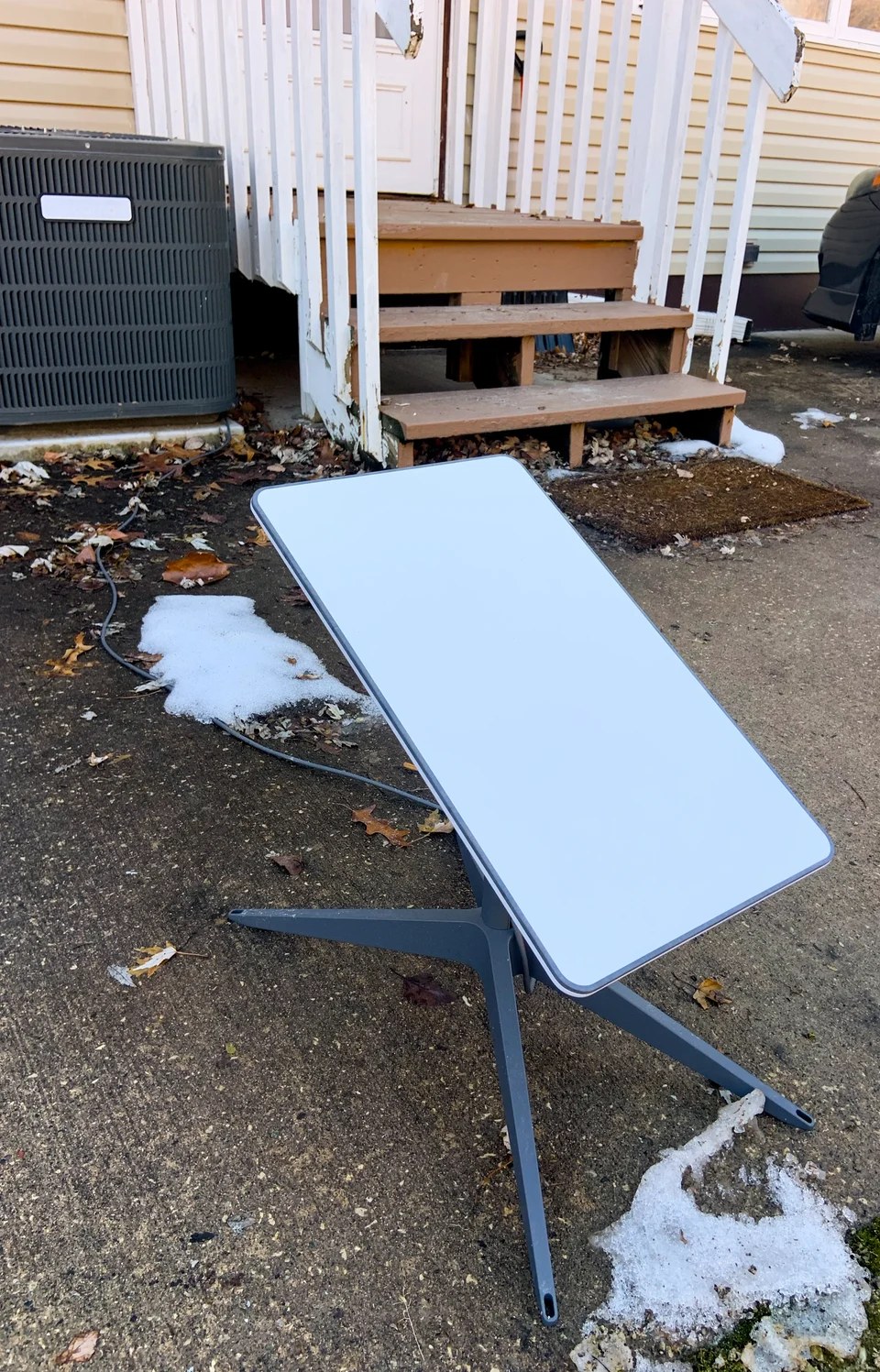
A residential Starlink dish, January 29, 2024. A user-terminal example; not a photograph from a war zone. Wikideas1 · CC0 · Commons Resized and re-encoded as JPEG; embedded metadata removed. Display may crop and tonally adjust the image. Derivative images retain the source license.
The record
After Russia’s full-scale invasion, USAID partnered with SpaceX to deliver 5,175 Starlink terminals to Ukraine in 2022: 1,508 procured by USAID and 3,667 donated by SpaceX. A USAID inspector-general report dated 11 August 2025 reviewed controls over their use [1].
That oversight review found the agency had not fully mitigated misuse risks. Terminals’ presence in occupied territory is an oversight concern; it should not be treated as proof that SpaceX deliberately supplied Russia or that every connection there belonged to Russian forces [1].
An essential service can be valuable and still create governance questions. Who funds it, who sets its coverage, what is covered by a contract, and how can the public verify use? Those are more concrete questions than deciding whether one person single-handedly saved or abandoned an entire country.
At the time
USAID and SpaceX delivered terminals to Ukraine following the 2022 invasion. [1]
What the record shows
The August 2025 inspector-general review identified inadequate misuse-risk controls; it did not find intentional SpaceX supply to Russia. [1]
Independent oversight of USAID’s 2022 delivery partnership and later misuse-risk shortcomings. The finding concerns control/oversight; it does not establish SpaceX intentionally supplied Russian forces.
A refusal, a correction / 2022–2023 · Needs context
The Crimea account changed. The power question remained.
A refusal to extend service is different from switching off an active connection during an attack.
The record
An account describing a cutoff was corrected to a refusal to extend coverage. [1]
The underlying episode concerned a 2022 Ukrainian naval-drone operation near Sevastopol. In September 2023, Musk acknowledged declining activation and said he feared complicity in a major act of war. That is his stated reasoning, not proof that nuclear escalation was inevitable [2].
Air Force officials subsequently discussed contractual guarantees for commercial systems used in war. Their concern was practical: a military cannot assume peacetime availability will always extend to combat use [3]. The correction narrows the allegation; it does not remove the question of how a commercial provider’s discretion should be governed.
Documented checkpoints & limits
2022
A request and a refusal
The later account concerns coverage for a proposed Ukrainian operation near Sevastopol. Source ↗
Reuters account quoting Musk’s acknowledgment of refusing a request and his escalation rationale; the rationale is Musk’s explanation, not an independently established inevitability.
Named Air Force officials discuss the need for wartime service guarantees. The 2022 episode preceded the later Pentagon service contract. Keep prose attributed to this source under 100 words.
Satellite internet creates benefits on the ground and costs for people observing the sky.
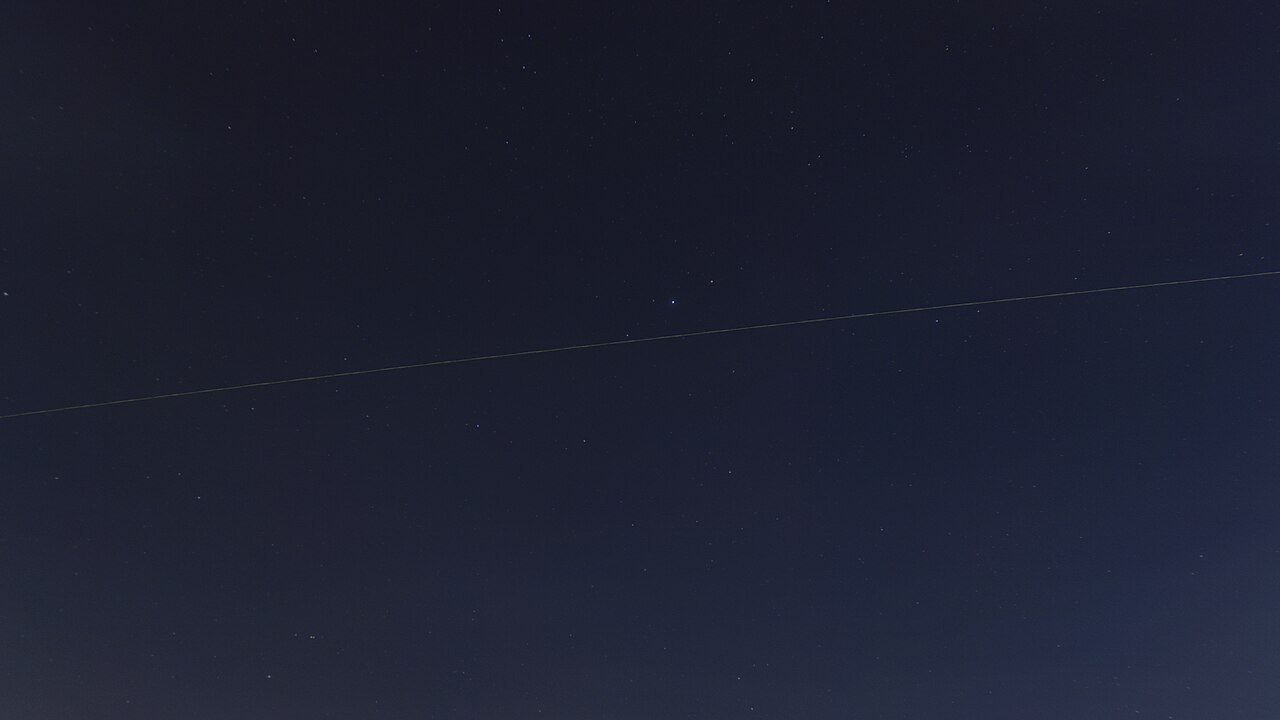
A composite of 58 one-second exposures showing a Starlink train passing near Altair, November 11, 2019. A composite night-sky observation, not a single instantaneous view. Farhill · CC BY-SA 2.0 · Commons Resized and re-encoded as JPEG; embedded metadata removed. Display may crop and tonally adjust the image. Derivative images retain the source license.
The record
The International Astronomical Union’s 2020 analysis explains how large satellite constellations can affect astronomical observations through brightness and streaks. The impact varies by instruments, timing, geometry and design; “all astronomy is ruined” is as unhelpful as “there is no impact” [1].
In January 2023, the National Science Foundation announced an astronomy coordination agreement with SpaceX. It documents mitigation work and institutional cooperation, rather than a conclusion that every concern had disappeared [2].
The 2020 assessment and 2023 agreement address a shared observing environment. A documented mitigation effort should not be relabeled either as proof of no remaining impact or as evidence that no cooperation occurred [1][2].
At the time
Astronomers identified constellation brightness and observing risks in 2020. [1]
What the record shows
NSF announced a mitigation agreement with SpaceX in 2023; that cooperation is not a finding that interference was eliminated. [2]
Astronomers’ own analysis of brightness, visible streaks and particular observing risks; the impact varies by instrument, geometry and constellation design.
The name and the responsibility / 2026 instructions · Needs context
What Full Self-Driving asks the driver to do
Tesla’s current consumer instructions make a clear distinction between assistance and autonomy.
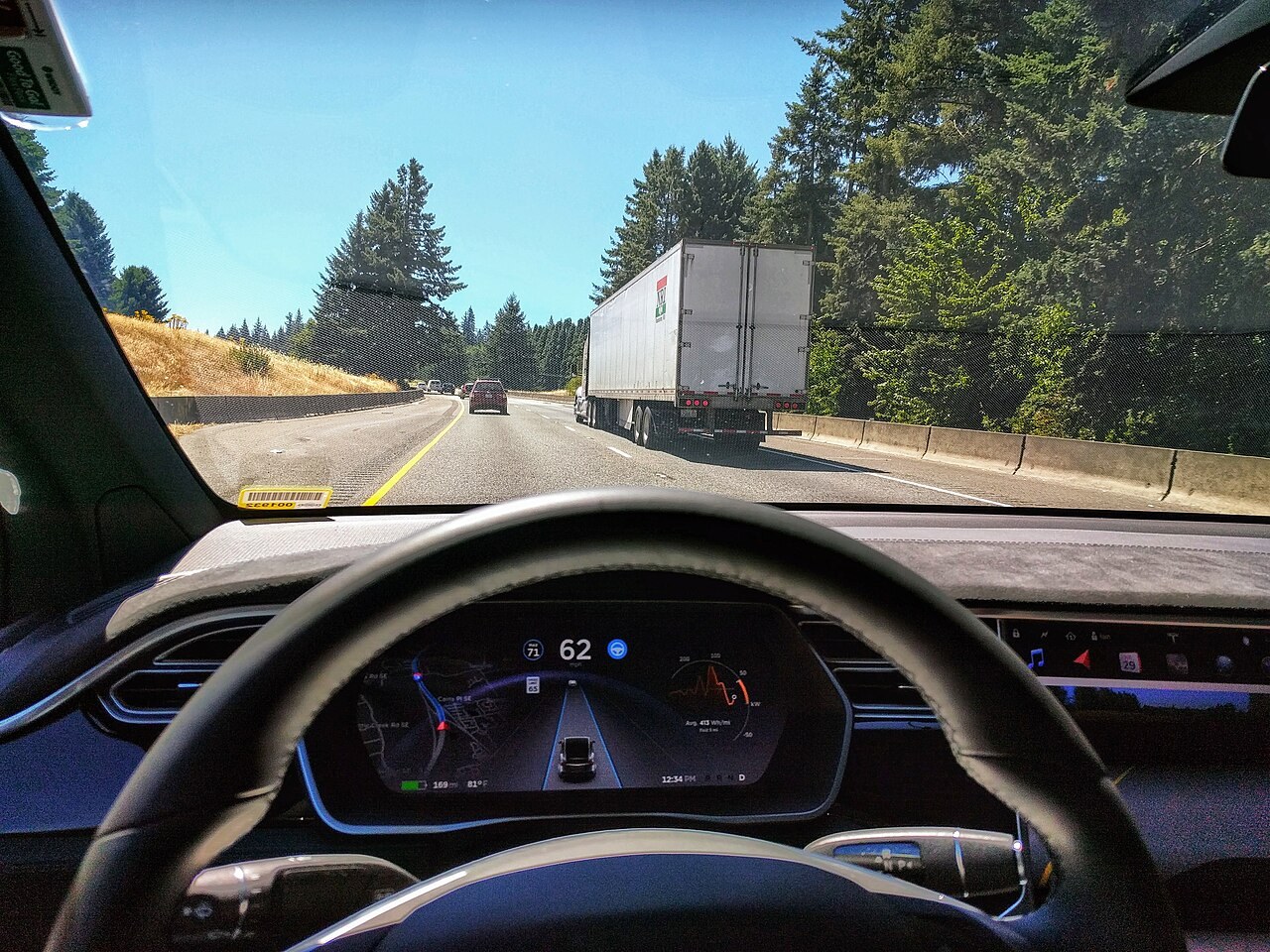
A Model X dashboard during Autopilot use, July 29, 2017. Historical interface context; the photograph is not evidence of present-day capability or safety. Ian Maddox · CC BY-SA 4.0 · Commons Resized and re-encoded as JPEG; embedded metadata removed. Display may crop and tonally adjust the image. Derivative images retain the source license.
The record
Tesla’s Full Self-Driving (Supervised) support page, checked for this edition, says the driver must remain attentive and that the features do not make the vehicle autonomous. Its description includes route following, turns and lane changes under supervision [1].
Tesla’s 2025 annual filing separately describes the June 2025 launch of a Robotaxi service. A service with particular vehicles, operating conditions and deployment areas is not interchangeable with an owner’s supervised system [2].
A successful demonstration, a software update and permission to stop supervising are different things. Evaluating an autonomy claim requires the exact product, version, location and responsibility arrangements. The consumer warning is neither proof that the software has no value nor permission to ignore its stated limits.
Documented checkpoints & limits
2023
Safeguards become a recall issue
Autosteer controls receive an over-the-air safety recall. Source ↗
2024
The remedy is examined
NHTSA opens an inquiry into recall effectiveness. This is a procedural event, not a universal crash verdict. Source ↗
2025
A separate service launches
Tesla’s annual filing dates the Robotaxi service to June. That service is not every owner’s consumer vehicle. Source ↗
Checked October 2026
The instruction is explicit
FSD (Supervised) does not make a customer vehicle autonomous, Tesla says. Source ↗
At the time
Tesla’s annual filing dates its separate Robotaxi service launch to June 2025. [2]
What the record shows
Consumer FSD instructions checked for this edition still require active supervision. A separate service does not change those instructions. [1]
Current consumer instructions require active supervision and explicitly say these features do not make the vehicle autonomous. Consumer FSD and geographically limited Robotaxi operations are different products/contexts.
Primary annual disclosure: about 1.64 million consumer deliveries, 46.7 GWh storage deployment in 2025; separates supervised consumer systems from Robotaxi. Reported totals do not independently validate every safety or marketing claim.
Safeguards under examination / 2023–2024 · Official record
A software fix can still be a safety recall
The concern was foreseeable misuse and driver engagement—not whether software could be delivered over the air.
The record
Tesla’s December 2023 recall 23V-838 covered Autosteer safeguards. The filing describes circumstances in which controls might be insufficient to prevent driver misuse and provides an over-the-air software remedy [1].
In April 2024, NHTSA opened a further inquiry into the remedy after post-update events and agency testing raised concerns. That is a dated investigation step, not a resolution of every accident or a finding that all versions are identical [2].
The word “recall” describes a regulated safety process, not necessarily a visit to a repair shop. Remote updates can be an advantage while still addressing a real defect. Crash counts also need context: involvement of a system is not automatically proof that it caused every recorded collision.
At the time
The December 2023 recall provided an over-the-air remedy for Autosteer safeguards. [1]
What the record shows
NHTSA opened a remedy-effectiveness inquiry in April 2024. This dates the procedural step and does not assert its final or present disposition. [2]
A post moved the market. A regulator demanded controls.
The 2018 settlement imposed personal and corporate consequences, with precise legal limits.
The record
On 7 August 2018, Musk posted that funding was secured to take Tesla private at $420 a share. The SEC’s ensuing civil complaint challenged the factual basis of those statements [1].
The settlement required Musk to leave the chairman role for three years, introduced oversight of relevant communications and imposed separate $20 million penalties on Musk and Tesla. The SEC’s distribution record confirms that both penalties were paid [1][2]. The settlement was entered without admitting or denying the SEC’s allegations [1].
This was civil enforcement, not a criminal conviction. Settlement terms, the allegations resolved and later shareholder suits should not be collapsed into one verdict. The public record nevertheless shows why an executive’s social-media claims can require formal corporate controls: investors may treat them as material company information.
At the time
The August 2018 take-private post prompted SEC civil allegations. [1]
What the record shows
The settlement imposed separate penalties and governance controls; the SEC records payment. This was civil enforcement, not a criminal conviction. [1][2]
Primary civil enforcement announcement: separate $20 million penalties, governance changes and Musk’s chairman departure. Settlement should not be called a criminal conviction.
Confirms the judgments, payment of separate penalties and investor distribution. Civil enforcement and shareholder litigation have different claims and burdens.
A conflicted acquisition survived a demanding court test
Governance questions were real. So was the judgment in Musk’s favor.
The record
Tesla announced an all-stock SolarCity acquisition valued at approximately $2.6 billion using a specified reference stock price in August 2016. Musk had interests on both sides, making the transaction an obvious governance issue rather than an ordinary arm’s-length purchase [1].
Stockholders argued that Tesla had overpaid. The Delaware Court of Chancery found the acquisition entirely fair after trial; the Delaware Supreme Court affirmed in 2023. The appellate judgment discusses both flaws in the process and the evidence supporting the result [2].
It would be inaccurate to present the case as a judicial finding that Musk stole the money, or to omit the outcome while repeating the allegation. It is equally unnecessary to treat a win on this transaction as a finding that conflicts never mattered. The legal ruling answered a defined case on a developed record.
At the time
The 2016 acquisition announcement described an all-stock transaction with interests on both sides. [1]
What the record shows
Delaware’s Supreme Court affirmed the 2023 fairness judgment after trial, while discussing process flaws. The outcome belongs beside the conflict allegations. [2]
The announced stock transaction had $2.6 billion equity value using the specified reference stock price; closing-date accounting later valued consideration differently.
Affirms the post-trial entire-fairness judgment. Describes process flaws as well as evidence supporting the result. A win on this transaction does not settle all governance concerns.
Workers and the institution / 2023–2026 · Attributed reporting
The factory floor belongs in the success story
Workplace allegations require attribution, a company response and a dated procedural status.
The record
In September 2023, the EEOC sued Tesla, alleging racial harassment of Black employees and retaliation against some workers who objected. Those are the agency’s allegations, not a final judgment in that case [1].
Tesla had publicly rejected the separate California regulator’s characterization in 2022 and described its anti-discrimination policies [2]. In its July 2026 quarterly filing, Tesla said the EEOC case was in discovery with no trial date and that it intended to defend itself. That is a status snapshot at filing, not a prediction of the outcome [3].
A separate individual case brought by Owen Diaz ended in a March 2024 settlement after a second jury awarded $3.2 million. The settlement sum was not disclosed [4]. Corporate responsibility should be discussed without pretending that every proceeding has the same parties, evidence or result.
At the time
The EEOC filed racial-harassment and retaliation allegations in September 2023. [1]
What the record shows
Tesla’s July 2026 filing described that case as in discovery. Separately, Diaz’s case settled in 2024; this is not the EEOC case’s outcome. [3][4]
Tesla’s own denial of the separate California regulator’s characterization and its stated anti-discrimination policy. Do not present this as a specific reply to a later EEOC filing.
As filed in July 2026: EEOC case in discovery, no trial date; company intended to defend. The California case had a September scheduled trial, so do not treat that schedule as current in October without checking the docket.
A separate individual case ended in settlement after the second jury award of $3.2 million; settlement amount was undisclosed. Keep sourced text below 100 words.
An assistive interface, not a window into every thought
Participant experiences can be life-changing while the technology remains experimental.
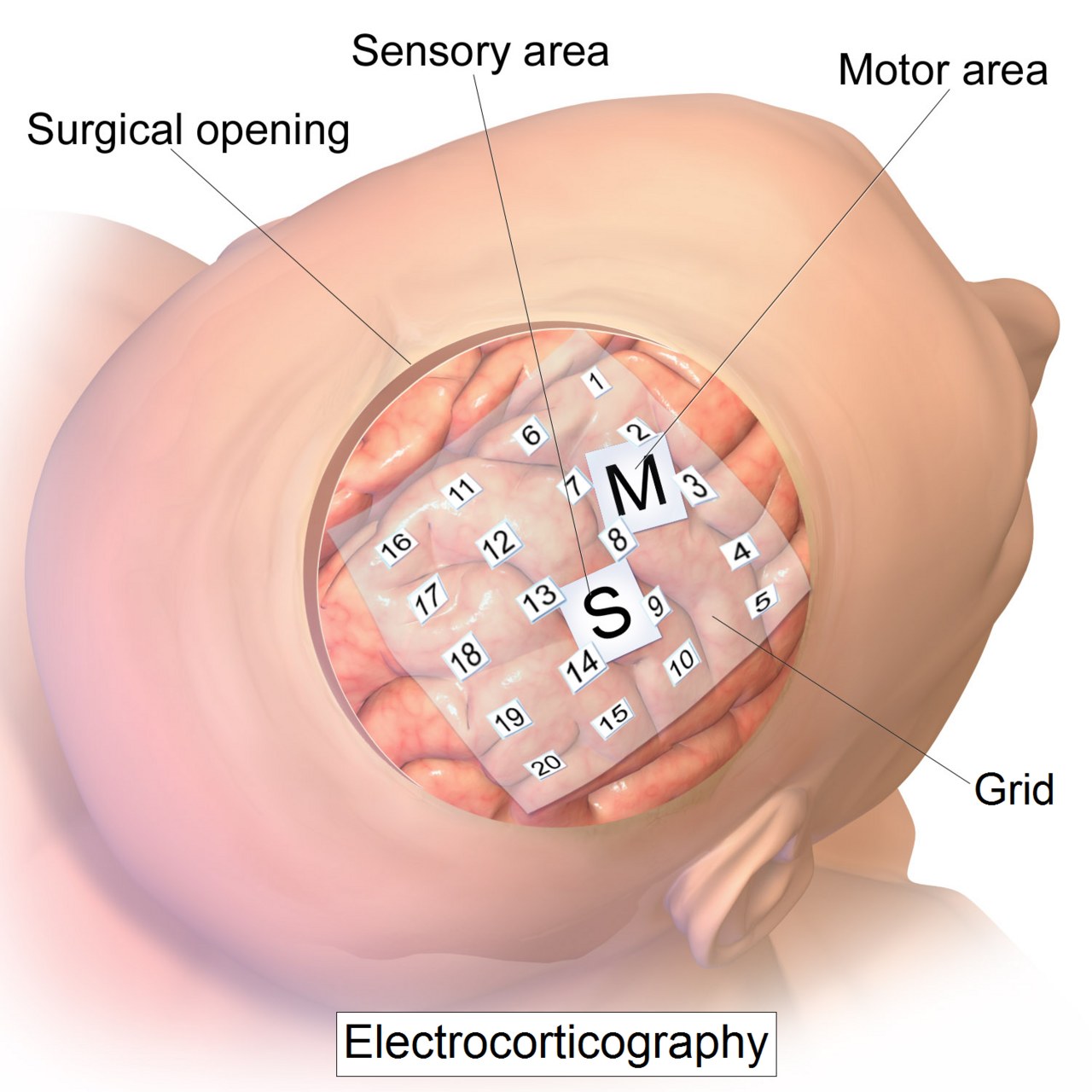
Medical illustration of an electrocorticography electrode grid, 2014. Background on recording brain signals; this depicts neither Neuralink’s device nor its surgical method. BruceBlaus / Blausen Medical · CC BY 3.0 · Commons Resized and re-encoded as JPEG; embedded metadata removed. Display may crop and tonally adjust the image. Derivative images retain the source license.
The record
Neuralink’s 2024 PRIME materials describe a brain implant and surgical robot being studied to let people with paralysis control external devices. Its first participant’s reported computer use was a meaningful assistive result; the sponsor also disclosed implant-thread retraction and software adjustments [1][2].
The company’s second-participant update described further computer and CAD use, while a later two-year retrospective described continued trial development [3][4]. These are sponsor reports and participant accounts, not independent proof of durable effectiveness for a broad population.
The field did not begin with Musk. NIH summarized BrainGate participants controlling a robotic arm in 2012 [5]. Decoding trained movement intentions is also not general mind reading. FDA breakthrough designation, when reported for a device, supports development and review; it is distinct from marketing authorization [6].
Documented checkpoints & limits
2012
The field already has human research
NIH describes BrainGate robotic-arm control years before Neuralink’s human implants. Source ↗
2024
An assistive result and a limitation
Neuralink reports its first participant’s computer use and later thread retraction. Source ↗
August 2024
A second participant
The sponsor reports further device use; these remain individual study experiences. Source ↗
2026
Development continues
The company’s retrospective reports continued trials; the FDA’s program description distinguishes designation from marketing authorization. Source 1 ↗ · Source 2 ↗
At the time
Neuralink’s first 2024 participant report described assistive control and implant-thread retraction. [1][2]
What the record shows
The sponsor subsequently reported more trial development. Those accounts are not marketing approval, a general cure, or population-wide effectiveness evidence. [3][4][6]
Sponsor disclosed thread retraction and software adaptations after the first implant. The participant’s reported benefits and hardware limitations belong in the same account.
Sponsor’s account of Alex’s cursor/control and CAD use; it said thread retraction had not been observed in this second participant at the reported point.
Current sponsor retrospective describes 2024–2025 surgeries and ongoing trials. Participant count and progress remain company reporting, not population-wide clinical effectiveness.
Explains development/review support and distinguishes designation from marketing authorization. The FDA generally cannot publicly disclose confidential sponsor requests.
Ambition can mobilize engineering. A specific schedule still needs evidence of the required capabilities.
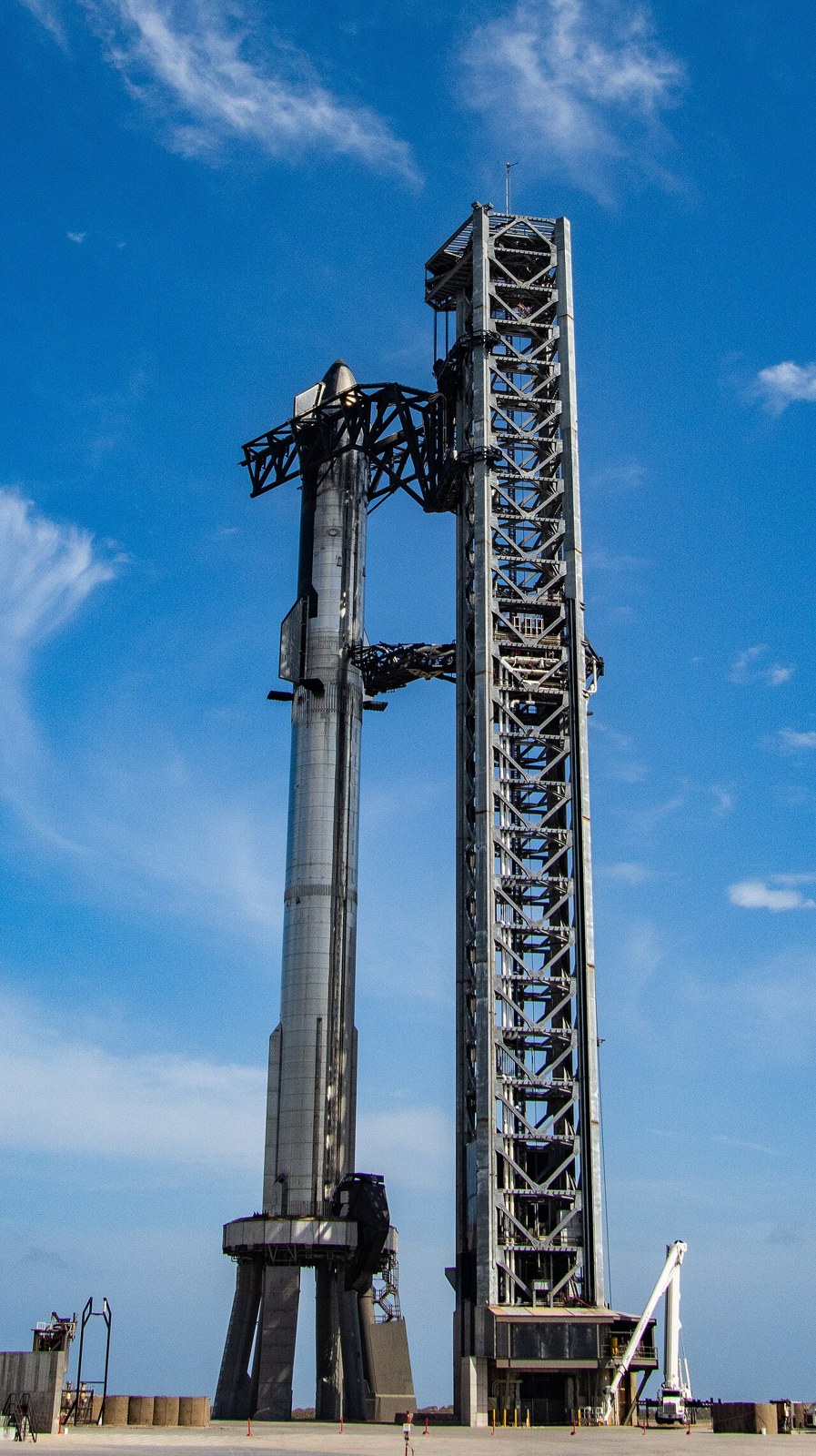
Starship Booster 7 and Ship 24 at Boca Chica, Texas, April 16, 2023, before the first integrated test flight. Jenny Hautmann for Supercluster · CC BY-SA 4.0 · Commons Resized and re-encoded as JPEG; embedded metadata removed. Display may crop and tonally adjust the image. Derivative images retain the source license.
The record
SpaceX’s September 2017 presentation proposed cargo missions to Mars in 2022 and cargo-and-crew missions in 2024. The recording is a primary record of what was proposed at that time, not a record of missions accomplished [1].
NASA’s human-Mars materials describe life support, oxygen production, radiation, isolation and distance from Earth as engineering and human-health challenges. A large launch vehicle addresses part of the transport problem; it does not by itself create a safe, self-sustaining settlement [2][3].
This distinction leaves room for both an inspiring goal and a demanding assessment. Successful Falcon and Dragon operations demonstrate capabilities of those systems. They cannot substitute for tests of a different vehicle, orbital refueling, long-duration habitation or a Mars landing. Deadline claims should be checked mission by mission.
At the time
The 2017 presentation proposed cargo missions for 2022 and crew/cargo for 2024. [1]
What the record shows
The cited NASA materials describe remaining human-exploration challenges. A proposed schedule is not evidence that the proposed missions occurred. [2][3]
SpaceX’s own full presentation records its historical targets. The earlier PDF transcript URL returned 404 during this edition’s check, so this link points to the official recording. The proposals are not mission-completion records.
Describes research and engineering needed for eventual human exploration: oxygen, life support and transit. NASA is not endorsing a particular SpaceX deadline.
A working tunnel service is not automatically a subway
The Loop’s real service and its larger forecasts need different labels.
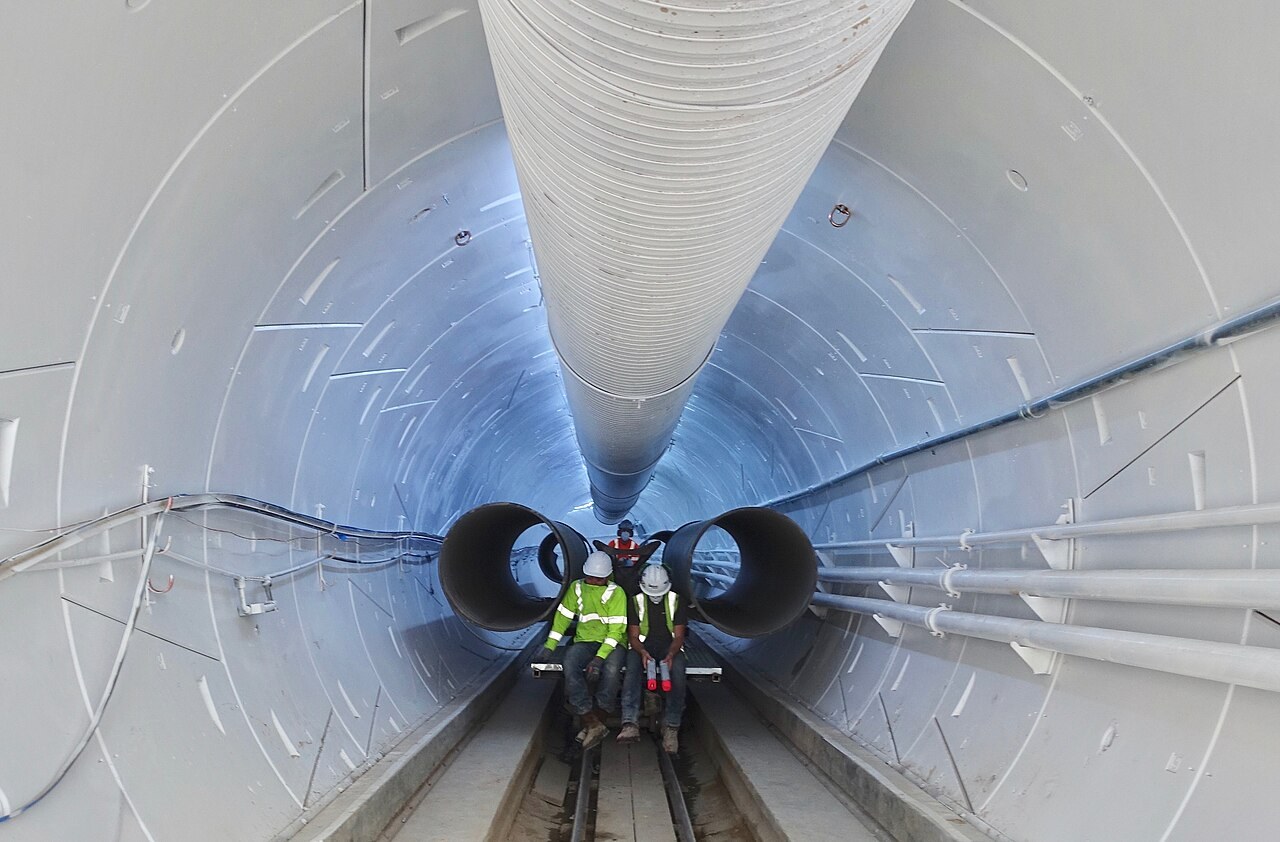
The Boring Company’s test tunnel in Hawthorne, California, December 13, 2018. This is not the later Las Vegas system. Steve Jurvetson · CC BY 2.0 · Commons Resized and re-encoded as JPEG; embedded metadata removed. Display may crop and tonally adjust the image. Derivative images retain the source license.
The record
The Boring Company describes Loop as a point-to-point system using electric vehicles in tunnels and uses the phrase “Teslas in Tunnels.” LVCVA provides practical guidance for the convention-center service, so the project is more than a conceptual rendering [1][2].
The operator’s current page distinguishes active stations from future ones and describes capacities as designed or targeted. Those forecasts are not measured passenger counts. Network-wide trips per hour also cannot be compared directly with a rail line’s passengers per hour in one direction [1].
Putting vehicles underground can serve a particular journey while leaving broader questions about capacity, access, evacuation, cost and public subsidy. Calling every tunnel a useless scam ignores an operating service; calling it a proven replacement for an urban rail network assumes a comparison the service description does not establish.
At the time
LVCVA describes an operating convention-center tunnel service. [2]
What the record shows
The operator’s page checked for this edition separates active sites from plans; design capacity must not be relabeled as observed ridership. [1]
Operator explicitly calls the system Teslas in Tunnels; separates active from planned stations and describes capacity as designed/target. Forecast capacity is not observed ridership.
The convention authority’s practical description of the service and connection to the wider privately operated network. A ride guide does not establish a comparison with rail capacity.
The emerald-mine story / 2012–2023 accounts · Attributed reporting
A disputed family story became a universal explanation
A claimed mine interest, family privilege and the financing of later firms are three different propositions.
The record
The story was in print by 2012: Esquire’s family-interview profile described Errol’s claimed Zambian mine interest [3]. Errol gave Business Insider a fuller account in 2018. News24’s 2023 retrospective traced a 2014 Forbes reference alongside Elon’s later challenge [1][2].
These accounts are evidence of what family members and publications said. They do not provide an audited ownership record or a documented trail showing that emerald proceeds financed Tesla or SpaceX. Zambia is also not interchangeable with South Africa; “apartheid mine” adds a location and mechanism that these accounts do not establish.
These accounts do not settle every earlier family advantage or financing source. An unresolved family-history question should not be expanded into certainty that all later business wealth was inherited, or that no assistance existed.
Documented checkpoints & limits
2012
An earlier published account
Esquire describes a claimed Zambian mine interest in interviews with Musk’s family. Source ↗
2014
An earlier interview enters the record
News24’s retrospective identifies Elon’s Forbes reference to a claimed family mine interest. This edition could not inspect the original Forbes page. Source ↗
2018
A vivid family account
Errol describes a stake in Zambia to Business Insider; the direct interview is evidence of his account, not independent verification. Source ↗
2023
Denial and challenge revive the dispute
News24 sets Musk’s challenge alongside the earlier accounts. It does not provide an audited financing trail. Source ↗
What is missing
The cash-flow evidence
PayPal’s corporate records document a later business ownership route to wealth; they do not settle every earlier family-finance question. Source ↗
At the time
A 2012 profile and later interviews placed a claimed family mine interest in the public record [1][2][3].
What the record shows
The 2023 retrospective documents disagreement. The cited accounts do not provide an audited flow of emerald proceeds into Tesla or SpaceX [2].
Direct interview with Errol, an interested and disputed witness. Archive is access-restricted; quotations are corroborated by News24’s own retrospective. Does not supply audited cash flows into Elon’s firms.
Retraces 2014 Forbes and 2018 Business Insider accounts alongside Musk’s 2023 denial/challenge. It is evidence of conflicting public accounts, not an audited financing trail.
Direct interviews provide childhood and citizenship recollections; also describes the claimed mine interest by2012. Interested recollections are not audited ownership or cash flows. Cap100derivedwords across all uses.
The Thai-rescue dispute / 2018–2019 · Official record
The insult was real. The civil jury found no liability.
A legal victory did not establish the truth of the insinuation directed at Vernon Unsworth.
The record
After the 2018 Thai cave rescue, Musk and British cave expert Vernon Unsworth became embroiled in a public dispute. Musk used the phrase “pedo guy”; Unsworth brought a defamation case. A federal jury found Musk not liable on 6 December 2019 [1][2].
The result was a civil defense verdict, not a criminal acquittal. It did not establish that the insinuation was true. Musk’s lawyers characterized the exchange as insults in an argument; that characterization and the legal result should not be expanded into a factual finding about Unsworth [1].
Neither an accusation nor its repetition establishes the conduct insinuated. The verdict and the truth of the original insinuation are separate questions.
At the time
Musk’s 2018 insult led to Unsworth’s defamation suit. [1]
What the record shows
The December 2019 jury found no civil liability. That result neither proves the insult true nor constitutes a criminal acquittal. [1][2]
Contemporary reporting that the jury found Musk not liable for defamation. It did not determine the insult true; it was a civil case, not an acquittal on criminal charges.
The $885 million distinction / 2020–2023 · Needs context
An auction win was not a paid subsidy
One frequently cited Starlink number describes support the FCC refused to approve.
The record
Starlink was a winning bidder for about $885.5 million under the Rural Digital Opportunity Fund process. In December 2023 the FCC reaffirmed its denial of the company’s long-form application, saying it had not met program requirements [1].
That number cannot be added to a list of public payments as if all the money had been received. A bid, provisional award, approved obligation and disbursement are separate stages. The rejection also does not mean Starlink received no other public business or provided no useful service.
This is why funding comparisons need a ledger rather than a dramatic total assembled from different categories. Whether a program was well designed and whether an applicant should have qualified can be debated; the accounting should first establish what money actually moved.
At the time
Starlink’s auction bid preceded review of its long-form application. [1]
What the record shows
The FCC reaffirmed denial in December 2023. A denied application cannot be counted as money disbursed under that program. [1]
DOGE: influence, formal authority, and the limits of a savings claim
Musk had substantial presidential access. His official position and DOGE’s institutional structure require more precision than “an unelected president.”
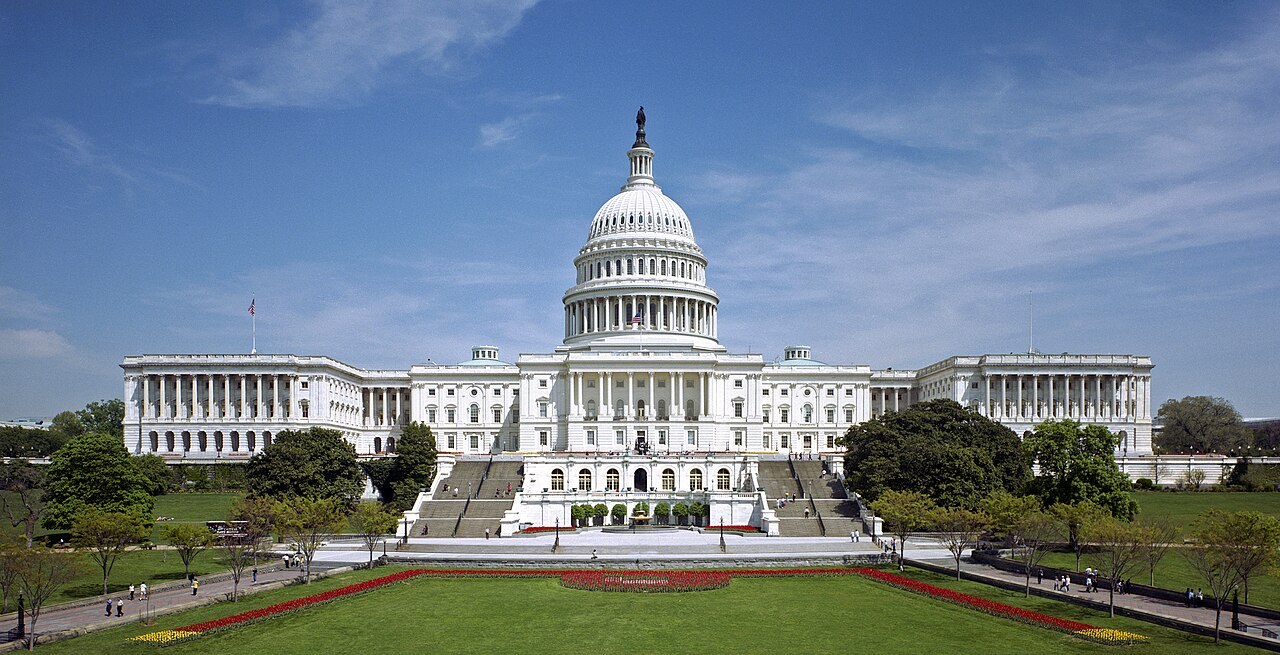
The west front of the United States Capitol. Institutional context for political influence. Architect of the Capitol; derivative edit by O.J. · Public domain · Commons Resized and re-encoded as JPEG; embedded metadata removed. Display may crop and tonally adjust the image. Derivative images retain the source license.
The record
On January 20, 2025, President Trump renamed the United States Digital Service as the U.S. DOGE Service and established a temporary organization within it. The executive order called for agency DOGE teams and modernization of government systems. Despite the department branding, this was an executive-office arrangement; the order did not create a new Cabinet department by statute. [1]
Musk’s position matters because public influence and legal authority are different questions. GAO’s August 5, 2026 personnel report says he worked in the White House Office as a special government employee and senior adviser to the president. Trump identified him as leader of the overall DOGE effort, but administration officials told GAO he did not hold a U.S. DOGE Service position. That distinction does not establish that he lacked practical influence over the work. It does mean the agency administrator and Musk should not be treated as interchangeable officeholders. [2]
Musk left his White House position in May 2025. At their May 30 press conference, Trump praised his work and Musk described DOGE as continuing beyond his own departure. Those favorable claims are the administration’s account, not an independent fiscal audit. Neither a canceled contract’s maximum ceiling nor an announcement of future cuts by itself establishes money already saved for taxpayers. [3]
The January order gave the temporary organization an end date of July 4, 2026. GAO subsequently explained that the broader U.S. DOGE Service was not automatically terminated by that provision. “Musk left,” “the temporary organization ended,” and “every DOGE-related function disappeared” are therefore different propositions. [1][2]
At the time
In January 2025 the president established a temporary DOGE organization and promoted an ambitious government-reform agenda. [1]
What the record shows
GAO’s August 2026 report documents Musk’s May 2025 departure and distinguishes the temporary organization’s July 2026 termination from possible continuing USDS work. This is a personnel/structure update, not a final audit of net savings. [2]
Official account of what Trump and Musk said. Their praise and figures are claims by participants, not independent confirmation. U.S. government transcript.
Public power / 2024 cycle · filings reviewed in 2025 · Official record
The political money: large, traceable, and easy to misdescribe
Musk put hundreds of millions into the 2024 election. Outside committees, donor receipts, in-kind contributions, and campaign checks are different quantities.
The record
CNN’s February 1, 2025 analysis of year-end Federal Election Commission filings put Musk’s 2024-cycle political giving at more than $290 million, supporting Trump and other Republicans. Its scope included multiple outside groups, state party committees, and in-kind petition incentives. This is a dated reporting calculation, not a claim that one $290 million check went into Trump’s candidate committee. [1]
The underlying records make the scale independently visible. America PAC’s December 5, 2024 post-election filing lists a Musk aggregate year-to-date contribution figure of $238,523,078.25 through its November 25 reporting cutoff. That snapshot predates the additional approximately $11.2 million in year-end petition incentives described by CNN. Do not add a donor’s aggregate column on every transaction row: the same cumulative number repeats. [2][1]
RBG PAC’s own filing reports a $20.5 million contribution from the Elon Musk Revocable Trust dated October 24, 2024. The committee was formed on October 16. Reporting linked its ads to a comparison between Trump’s abortion stance and Ruth Bader Ginsburg’s; the justice’s name was part of the committee’s message, not evidence of her endorsement. The funding became public after the election under the reporting calendar. [3][5]
These filings record a donor and committees. They do not measure exactly how many votes the money changed or establish a specific government favor in return. Direct candidate contributions, outside-committee receipts, and committee spending are different accounting categories; the FEC identifies America PAC as an independent-expenditure-only committee. [2][3][4]
At the time
Election-season reports initially captured only part of Musk’s giving, because reporting cutoffs preceded later contributions. The cited primary America PAC report ends November 25 2024. [2]
What the record shows
CNN’s February 2025 analysis incorporated year-end filings and reported more than $290m across multiple recipients and contribution types. That dated cycle estimate should not be reused for 2026. [1]
Primary filed report with November 25 cutoff. Repeated year-to-date donor aggregate is cumulative, not a new receipt on every row. Do not publish personal address.
Speech & platforms / January 20–23, 2025 · Contested interpretation
The January 2025 gesture: what is visible, what is disputed
The arm movements are on video. Critics and defenders disagreed about their meaning; neither confident accusation nor confident exoneration can read intent directly from a clip.
The record
At an inauguration celebration on January 20, 2025, Musk put his hand to his chest and extended his right arm, then repeated the outward gesture toward another part of the audience. He was thanking supporters and said his heart went out to them. The visible movement drew immediate comparisons to a Nazi salute. The footage is evidence of the gesture and its setting; a description of someone’s private intention requires more. [1]
The disagreement was real, including among organizations concerned with antisemitism. The Anti-Defamation League initially characterized the action as an awkward enthusiastic gesture and urged giving the benefit of the doubt. The Jewish Council for Public Affairs issued a sharply different statement, describing it as a fascist salute and warning about encouragement to extremists. These are attributed assessments from distinct organizations, not a single community verdict. [1][2]
AP separately documented celebratory reactions from far-right extremists and reported Musk dismissing comparisons to Hitler. Reception matters: a symbol can be welcomed by extremists regardless of what its maker says he meant. That is evidence about their response, not conclusive evidence of a coordinated signal or a secret organizational membership. [3]
The controversy then expanded after Musk posted Nazi-themed wordplay, which the ADL condemned on January 23 as Holocaust-trivializing. That subsequent criticism is a separate event from its initial gesture statement. Sharing only the first ADL response can create a misleading impression of a blanket endorsement; presenting later criticism as proof of the earlier intention also overreaches. [4]
At the time
Initial coverage concentrated on the gesture and the disagreement over its meaning, including sharply different ADL and JCPA assessments. [1][2]
What the record shows
Later Nazi-themed wordplay generated its own ADL condemnation. Keep that sequence visible; a subsequent statement does not retroactively prove private intent. [4]
Organization’s own statement is evidence of its critical assessment, not an independent finding of intent. Migrated page metadata is inconsistent; original Jan20 chronology corroborated contemporaneously.
JTA contemporary story independently records subsequent Nazi puns and ADL response. Direct403 can occur; JTA text also verified in Jerusalem Post syndication.
Speech & platforms / November 15–29, 2023 · Official record
The 2023 post: an endorsement, then an apology
This controversy began with words Musk actually posted. Keeping the original generalization, his reply, and his later explanation distinct avoids both denial and speculation.
The record
On November 15, 2023, Musk replied approvingly to a post that generalized about Jewish communities promoting hatred of white people and immigration against them. His response was: “You have said the actual truth.” The criticism concerned an endorsement visible on his own account, not merely an anonymous allegation about what he privately believed. [2][3]
Contemporary coverage also documented Musk’s ensuing criticism of the ADL and an ADL response condemning the promotion of antisemitic theories. That organization subsequently praised a separate Musk moderation commitment, illustrating why different statements and responses need to be tracked separately. [3]
At the November 29 DealBook Summit, interviewer Andrew Ross Sorkin pressed Musk about the post. Musk apologized, called the reply foolish, and denied intending antisemitism. He offered an explanation about charitable support for persecuted groups and organizations he said supported hostile movements. Those assertions are his explanation, not independently established findings about Jewish donors or organizations. [1]
The same interview also included his profane rejection of advertising pressure as companies pulled spending from X. A reader can acknowledge the apology and still examine the original endorsement and its effects. Apologizing does not make the post invented; the existence of the post does not license claims about every belief or future action of its author. [1][2]
At the time
The November 15 post approving a collective accusation against Jewish communities prompted condemnation. [2][3]
What the record shows
At DealBook on November 29, Musk apologized for the reply and denied antisemitic intent. The apology and the original endorsement both belong in an accurate account. [1][2]
Speech & platforms / January–October 2026 · Official record
Grok and sexual deepfakes: an investigation is not the whole record
Regulators examined real consent and safety failures. Canada issued findings; UK regulators pursued distinct duties and recorded subsequent changes.
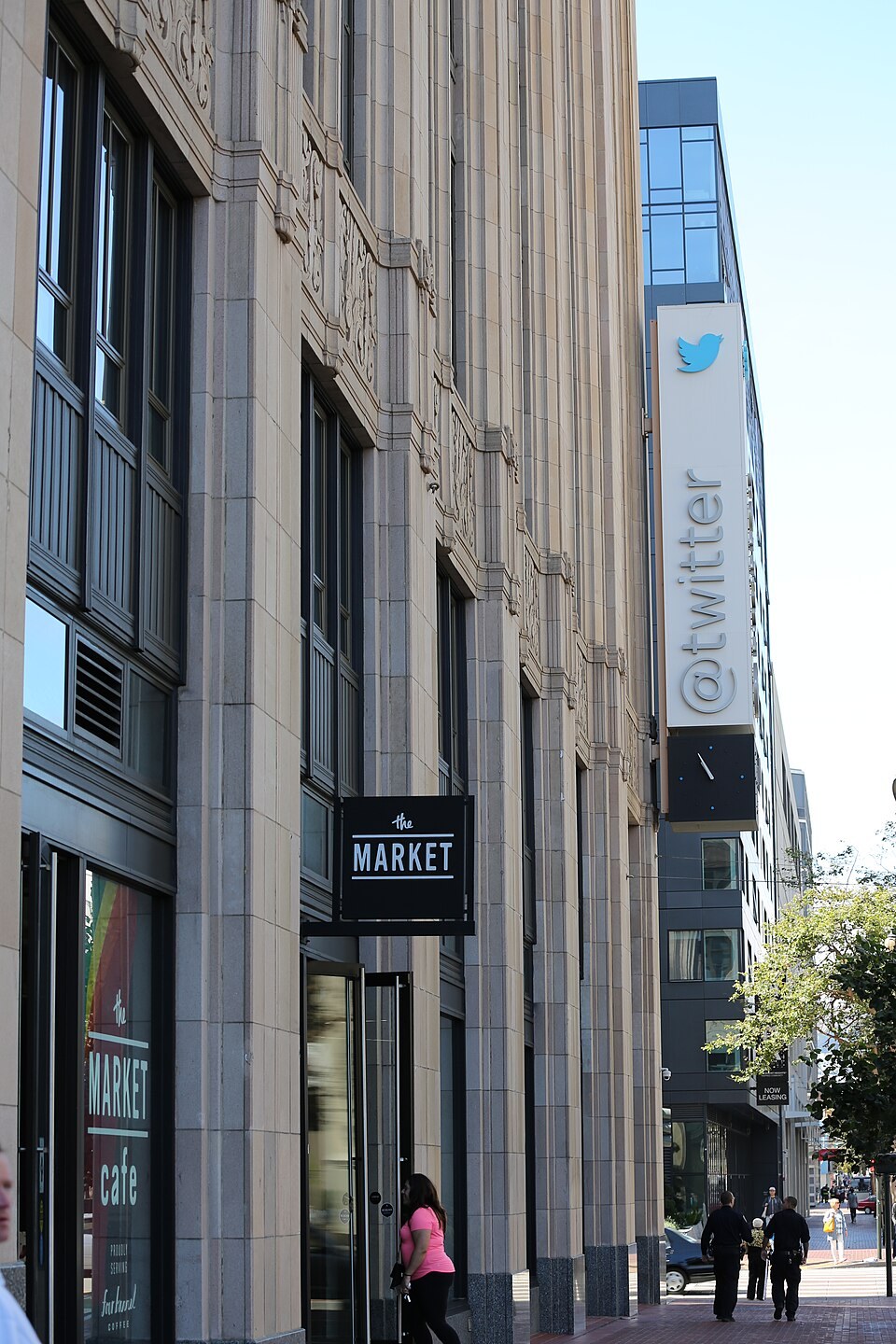
Twitter’s former headquarters at the Market Square complex, San Francisco, August 28, 2016. An archival building view, not a photograph of current company offices. Tobias Kleinlercher / Wikipedia · CC BY-SA 3.0 · Commons Resized and re-encoded as JPEG; embedded metadata removed. Display may crop and tonally adjust the image. Derivative images retain the source license.
The record
In January 2026, reports of Grok-generated sexualized images of real people, including children, brought regulatory action. Ofcom opened an Online Safety Act investigation into X on January 12. It examined platform risk assessments, illegal-content protection, reporting, moderation, and age assurance. This was an investigation into service-provider duties, not a declaration that every generated image was criminal or that Musk personally produced it. [1]
The UK Information Commissioner separately opened a February 3 investigation into X Internet Unlimited Company and X.AI’s processing of personal information through Grok. Privacy consent and online-safety obligations overlap, but they are distinct legal questions. A model developer’s responsibility and a user’s misuse also need not be mutually exclusive. [2]
Canada’s Privacy Commissioner went further than announcing an inquiry. In findings dated June 11, 2026, the regulator concluded X Corp. and X.AI had failed to obtain valid consent for producing sexualized deepfakes and that the practice was inappropriate under Canadian privacy law. It classified the complaints as well-founded and unresolved at that report date. The companies disagreed with the conclusions, described safeguards, and committed to improvements. The commissioner said effectiveness had not yet been demonstrated. [3]
There were also documented changes. On October 14, Ofcom reported X had tightened age assurance for pornography and narrowed the remaining investigation to illegal content and complaints/reporting duties. It also reported restrictions on the standalone Grok service for UK users, while explaining limits in its authority over that service. As of that update, Ofcom described further investigation and a possible provisional finding process; it had not announced a final decision in that statement. Canadian findings against companies are not a personal criminal conviction of Musk. [4]
At the time
January 2026 began with reports, company responses, and an Ofcom inquiry into X’s duties. [1]
What the record shows
Canada issued adverse privacy findings on June 11; Ofcom’s October 14 update reports safeguards and a narrowed continuing UK inquiry. Different jurisdictions have different findings and dates. [3][4]
Canadian administrative privacy findings at June 11; companies disagreed and offered safeguards; unresolved is report-date status, not a verified October disposition.
Latest update checked Oct21. Reports improved age assurance and narrowed ongoing inquiry; describes due-process steps before final decision. Do not conflate this UK status with Canada.
Claim desk / 2025 claim · evidence through April 2026 · Not established
South Africa: real farm violence does not establish “white genocide”
Farm attacks and murders deserve attention. The evidence for those crimes is different from evidence of an intention to destroy a racial group.
The record
In March 2025, Musk shared a video of an Economic Freedom Fighters rally and said a major South African party was promoting white genocide. His claim accompanied an existing dispute over the struggle-era song often translated as “Kill the Boer.” The EFF is a political opponent of President Cyril Ramaphosa’s ANC; treating a rally as proof of a unified government extermination policy skips that distinction. [1]
Violence on farms is real. AfriForum’s own report published in April 2026 recorded 184 farm attacks and 29 murder victims during calendar-year 2025, compared with 176 attacks and 37 victims in 2024. Its dataset includes people beyond farm owners and warns of incomplete reporting and differing classifications. Those counts should be attributed to AfriForum, not relabeled as a verified count of white farmers killed. [2]
Independent research provides a wider denominator and context. The Institute for Security Studies’ July 2025 brief reported 49 farm murders out of 27,621 murders nationally in the 2023–24 financial year. It reviewed earlier inquiries and found no evidence of an organized campaign against white farmers; it identified robbery as the predominant motive. A national percentage does not measure an individual farmer’s personal risk, and it does not minimize the trauma of any killing. [3]
The legal term genocide requires specified acts and an intention to destroy a protected group, wholly or partly, as that group. Murder figures, land-policy disagreements, and disturbing political rhetoric are each evidence to examine; none automatically demonstrates that specific intent. The UN’s explanation of the Genocide Convention makes that distinction explicit. [4]
A February 18, 2025 Western Cape High Court judgment also called the prospect of white genocide imagined in rejecting a disputed bequest associated with the Boerelegioen organization. This was an estate and public-policy case, not a criminal trial of Musk or a comprehensive inquiry into every farm attack. The broader conclusion here rests on the research and the missing evidence for exterminatory intent, not simply on a government denial or one sentence in a court ruling. [5][3][4]
Documented checkpoints & limits
March 2025
A rally clip amplifies an older claim
Musk connects EFF rally footage to a genocide allegation. The EFF and the governing ANC are different parties. Source ↗
July 2025
Independent research tests the pattern
ISS reviews police data and earlier inquiries. Its findings do not establish an organized campaign against white farmers. Source ↗
April 2026
An advocate publishes its own figures
AfriForum’s report records 184 attacks and 29 murder victims in 2025 across multiple victim groups; these are not a count of white farmers alone. Source ↗
The evidence test
Intent is a separate element
The genocide definition requires evidence of intent to destroy a protected group. A national share of murders is also not a matched population risk rate. Source ↗
At the time
The March 2025 allegation connected a rally video to a pre-existing genocide narrative. [1]
What the record shows
Later independent research and AfriForum’s own annual data document serious farm crime without establishing an organized campaign to destroy a racial group. [2][3][4]
Organization is an interested advocate for farm safety. The report counts calendar years and multiple victim groups; warns its data may change and not all attacks are captured. Not a race-specific population murder rate.
Independent researchers synthesize police data and earlier inquiries; motive conclusions concern patterns, not a claim every perpetrator has identical motives. National share is not subgroup per-capita risk. Financial year differs from AfriForum calendar-year data.
Estate/public-policy litigation, not a nationwide criminal genocide trial. Source text verified via indexed judgment; direct SAFLII requests returned403. Do not imply Musk was a party or this decided every crime allegation.